Must-see art in Geneva
Hodler, Giacometti, Picasso, and more! On a recent stopover in Geneva, I spent several enjoyable hours at the Musée d’Art et d’Histoire (MAH). I had been looking forward to seeing the museum’s extensive collection of landscapes by Ferdinand Hodler, a leading Swiss artist of the late nineteenth/early twentieth century, as I had only seen the occasional lone Hodler when visiting other European art museums.
Ferdinand Hodler
Hodler bridged Realism, Symbolism, and early Modernism, while developing a personal theory and painting style he called “parallelism” – expressing nature’s essential orderliness through symmetry and repetition. Mirrored lake reflections were a favorite subject, and there are several in the large Hodler room at MAH. While Hodler painted Lake Geneva frequently, many of the lake paintings in the Geneva museum are of Lake Thun, near his native Bern, Switzerland, a few hours away.
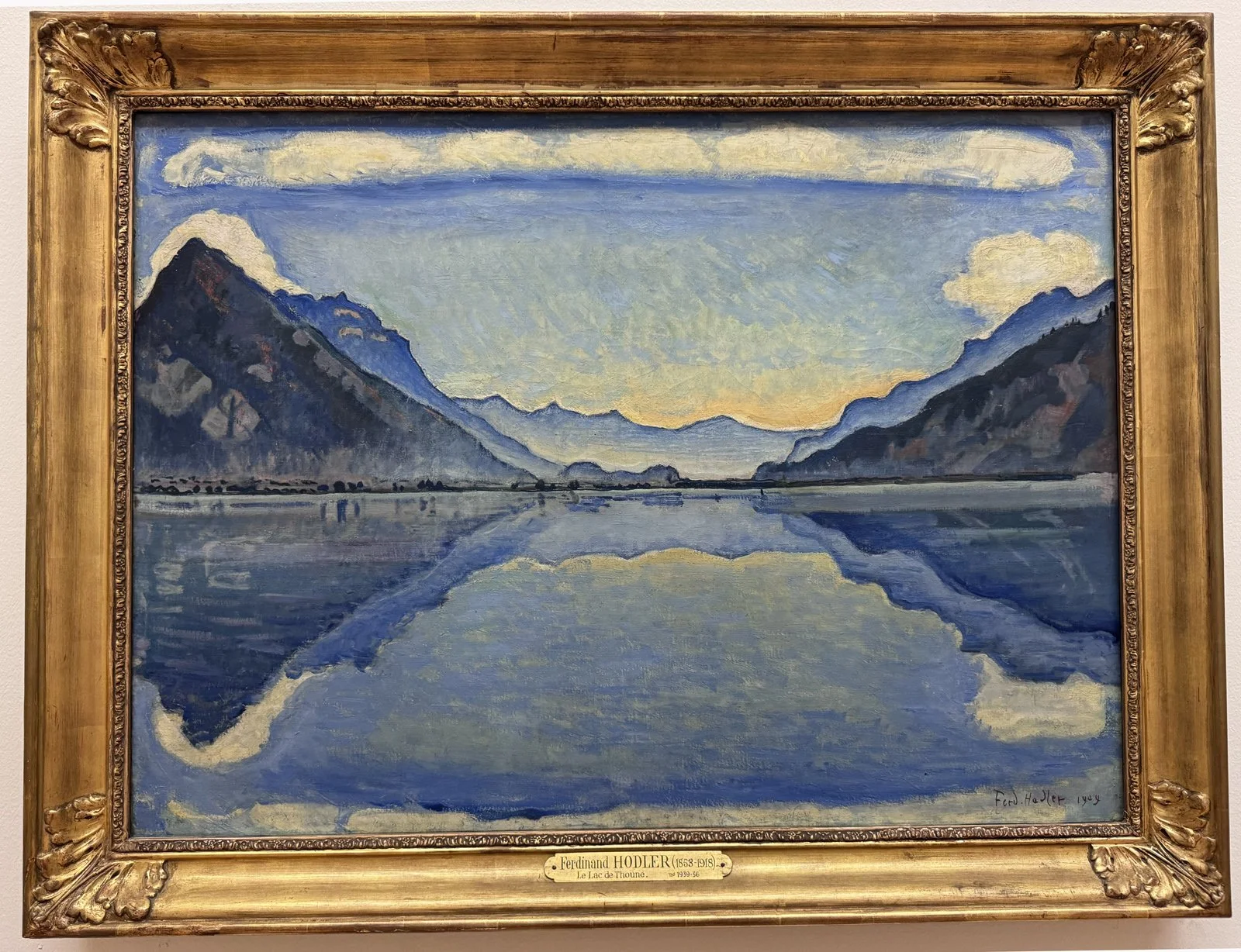
Ferdinand Hodler, Le Lac de Thoune aux reflets symétriques, 1909
Hodler also modernized Alpine art by shifting the focus away from sweeping, horizontal panoramas of mountain ranges to portraits of individual peaks, often in a vertical format. The compositions were tight, with a single pinnacle dominating the painting, placing the emphasis squarely on each summit’s personality and character. This shift in viewpoints echoed the increasing popularity of mountaineering, or summiting individual peaks through a combination of hiking, rock climbing, and ice climbing. Another contemporary development that facilitated Hodler’s mountain portraits was the building of mountain railroads. Almost all the viewpoints for Hodler’s mountain paintings were located near mountain railway stations. This included his portraits of the Jungfrau, one of the main summits of the Bernese Alps. One reason Jungfrau is so famous world-wide is its railway, inaugurated in 1912. Jungfraujoch, the plateau where the railroad sits, is the highest accessible point in Europe at 3,454m (over 11,300 ft) high.
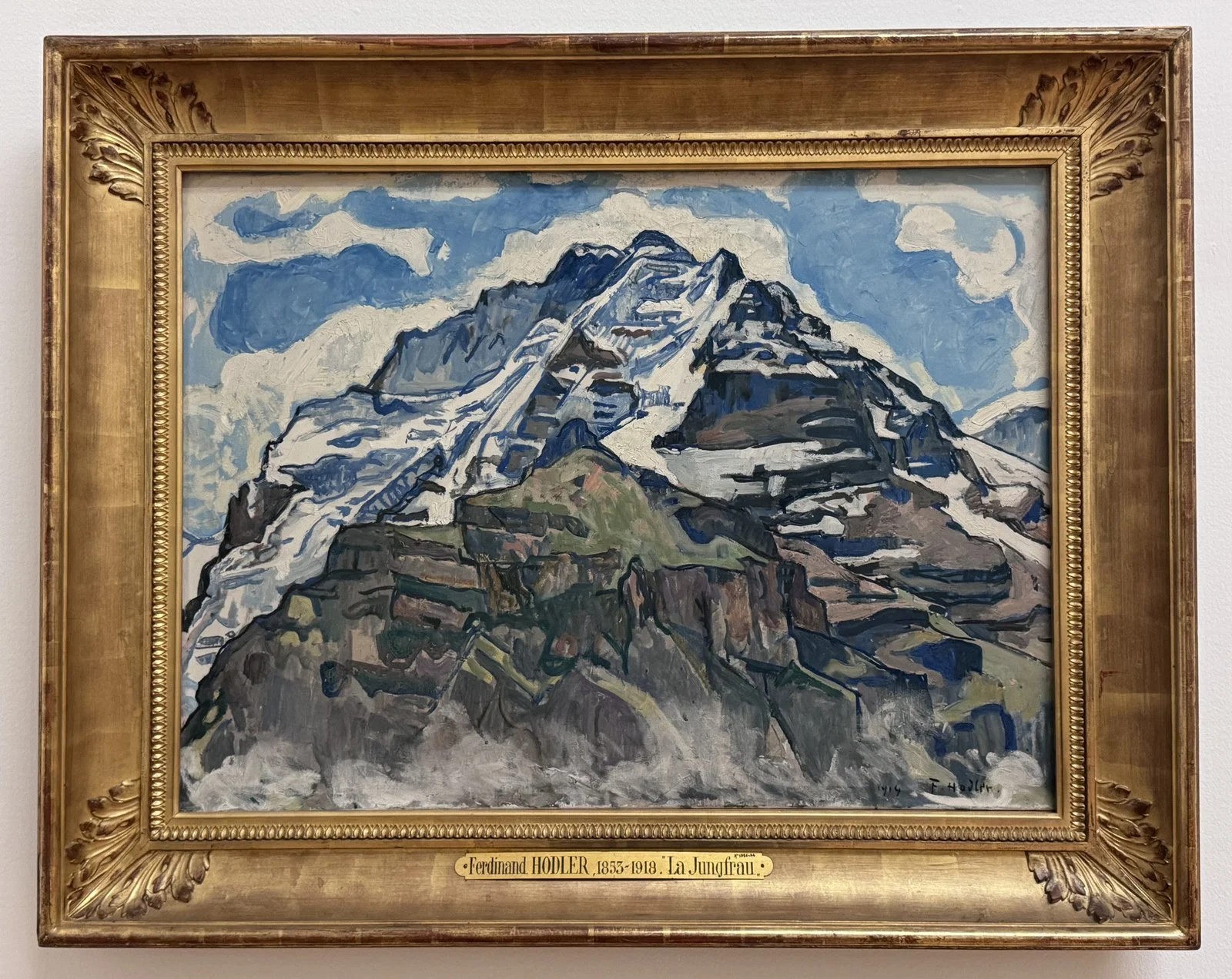
Ferdinand Hodler, La Jungfrau, 1912
The Giacomettis
My visit to MAH was my introduction to the work of Giovanni Giacometti, a Swiss painter and father of Alberto Giacometti, one of the most important sculptors of the 20th century. Giacometti’s painting and expressive use of color was strongly influenced by Vincent Van Gogh and Paul Gaugin, as you can see in the work below.
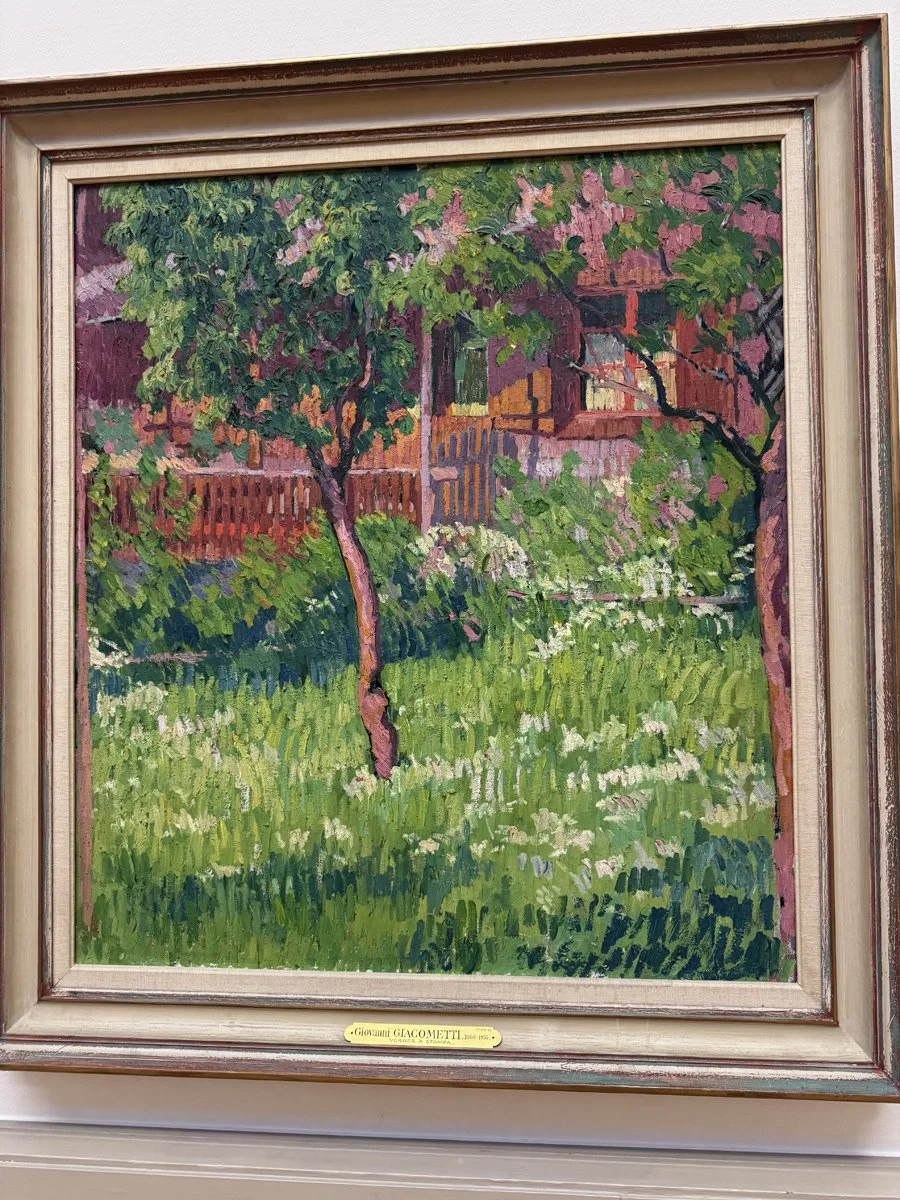
Giovanni Giacometti, L'Atelier, 1910 (Alternatively titled Der Garten in Stampa, or The Orchard in Stampa)
Another painter from the highly successful Giacometti art dynasty whose work is in MAH is Giovanni’s second cousin Augusto Giacometti. I was quite taken with his enigmatic painting La Boule de Verre, or The Glass Ball. Giacometti painted this while living in Florence, and the circular format is a clear nod to the traditional Renaissance tondo (a circular painting or relief). The central sphere contains a man in a blue suit; while dressed more formally than a working artist would be, the plethora of paintings and other studio paraphernalia suggest this is likely a self-portrait. The luminous sphere provides a sense of isolation, but also has visual qualities of its own, catching light and distorting the objects inside of it. The broad swathe of white with purple highlights on the left could be a veil of some sort, or a protective wrapping. The sphere itself alters perceptions, as an artist does with their brush. But it is not entirely clear what statement about himself, or his relation to the exterior world, Giacometti wanted to convey with this painting.
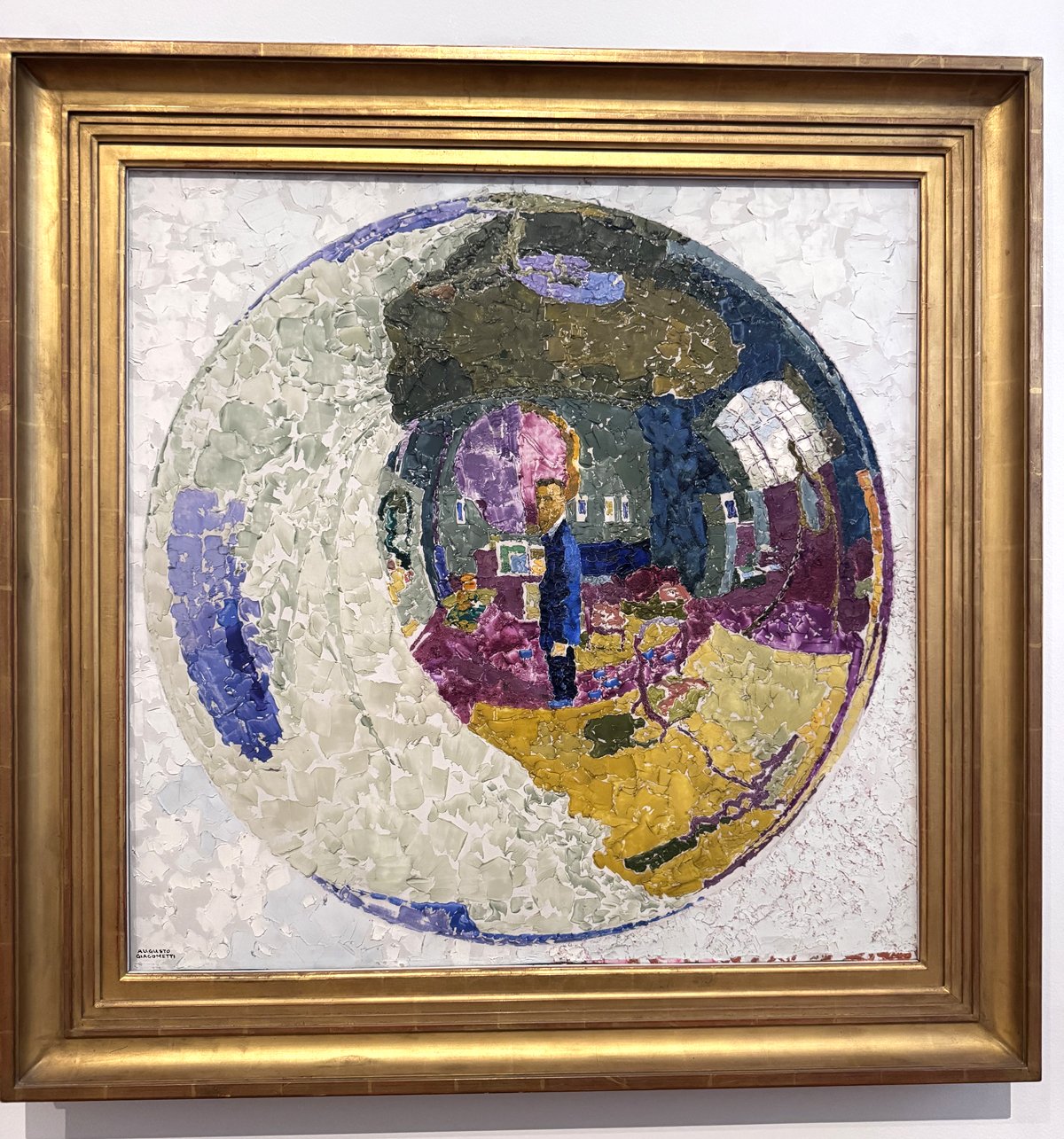
Augusto Giacometti, La Boule de verre, 1910
Despite these open questions of the painting’s meaning, the brushwork itself and the short, tessellated strokes of moody, introspective colors make for a visually compelling piece.
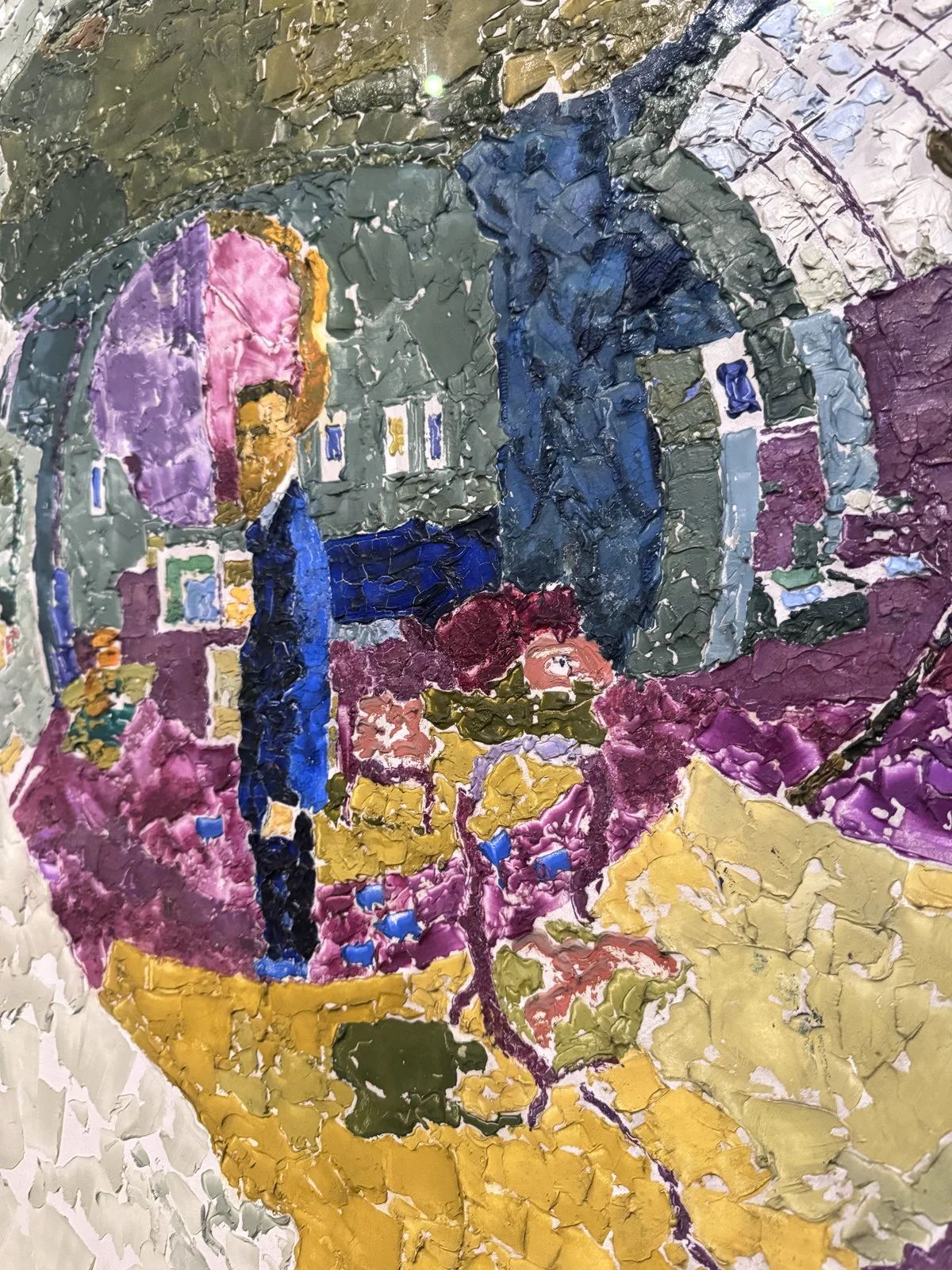
Detail, Augusto Giacometti, La Boule de verre, 1910
Pablo Picasso
This is not, by any means, my favorite Picasso, but it has an interesting story behind it and reveals a little about Picasso’s exploration of 2D (painting) vs 3D (sculptural) art, as well as his reinterpreting longstanding themes in art history. (Here, bathers in classical art, including Titian’s Diana and Actaeon, as well as Cézanne’s numerous bather paintings or Manet’s Le Déjeuner sur l’herbe.) In the summer of 1955, during the shooting of Henri-Georges Clouzot's film "Le Mystère Picasso", Picasso created a series of wooden bather sculptures from scrap wood and metal, meant to be viewed frontally. These weren’t individual portraits but symbolic, archetypal beachgoers — athletic divers and playful swimmers — characters at ease with their bodies. Next, Picasso created a series of drawings of these bathers engaged in active sports. Finally, the figures were translated to canvas and painted rather quickly, after years of preparatory studies. Afterward, Picasso said: “Other painters can spend a year repainting a centimeter; I think about a painting for a year – and then draw it in minutes.” Aside from conveying his love of the sea and the beach, some commentators see Picasso’s process and flattened figures as an homage to Matisse, his long-time frenemy and fellow Cote d'Azur resident, who had died in 1954.
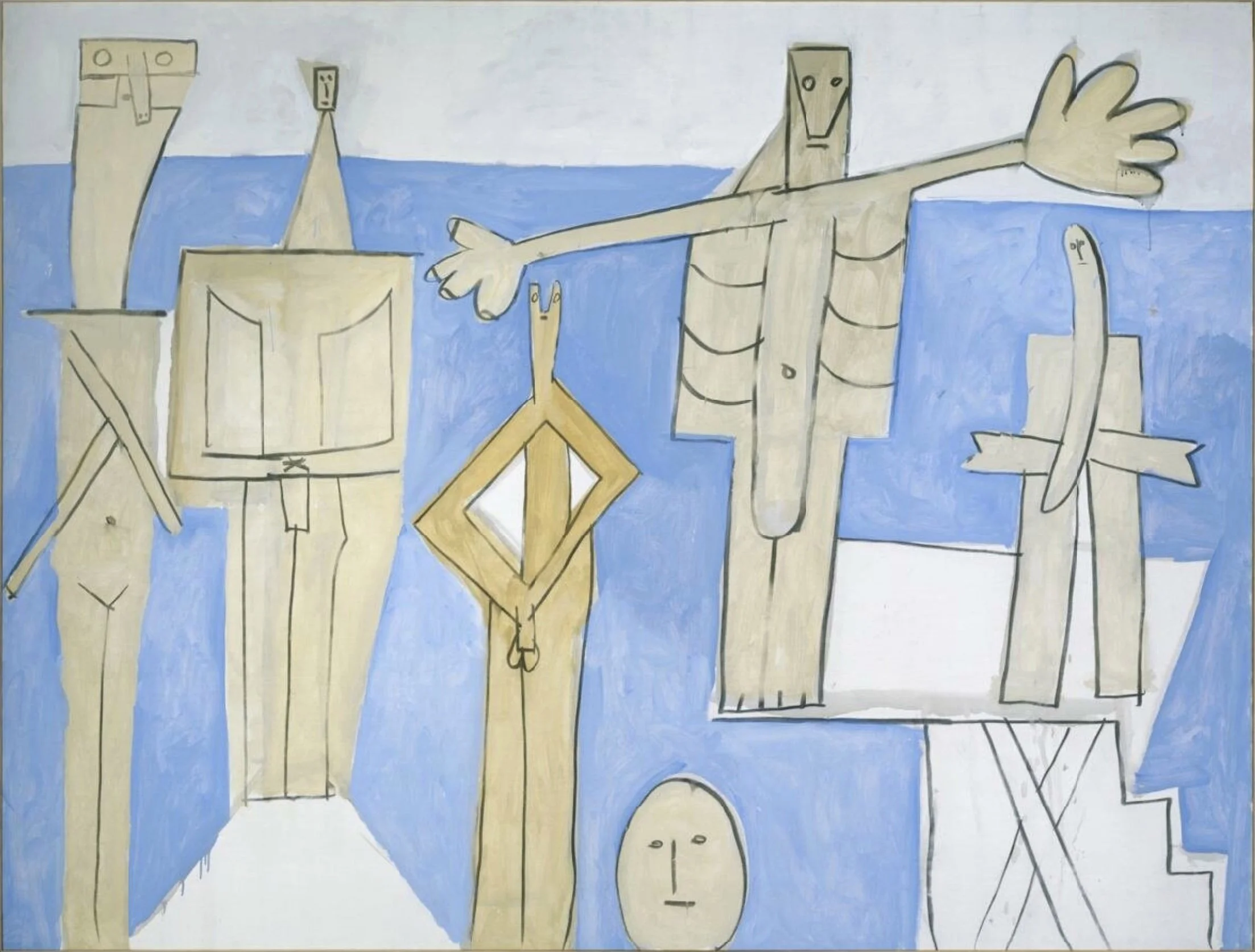
Pablo Picasso, Les Baigneurs à la Garoupe, 1957
Maurice de Vlaminck
Vlaminck, a self-taught French painter, was a leading Fauvist. His early works showcase intense, pure colors and loose brushwork. By the time La Maison de Chatou was painted in 1908, Vlaminck was moving away from Fauvism toward more muted colors and a more structured composition, influenced by a Cezanne exhibition he had visited several times, and been captivated by. The Cezanne influence is obvious in this painting, one of many depicting the countryside around the village of Chatou, where he shared a studio with André Derain. This painting is viewed as a turning point in Vlaminck’s artistic career.
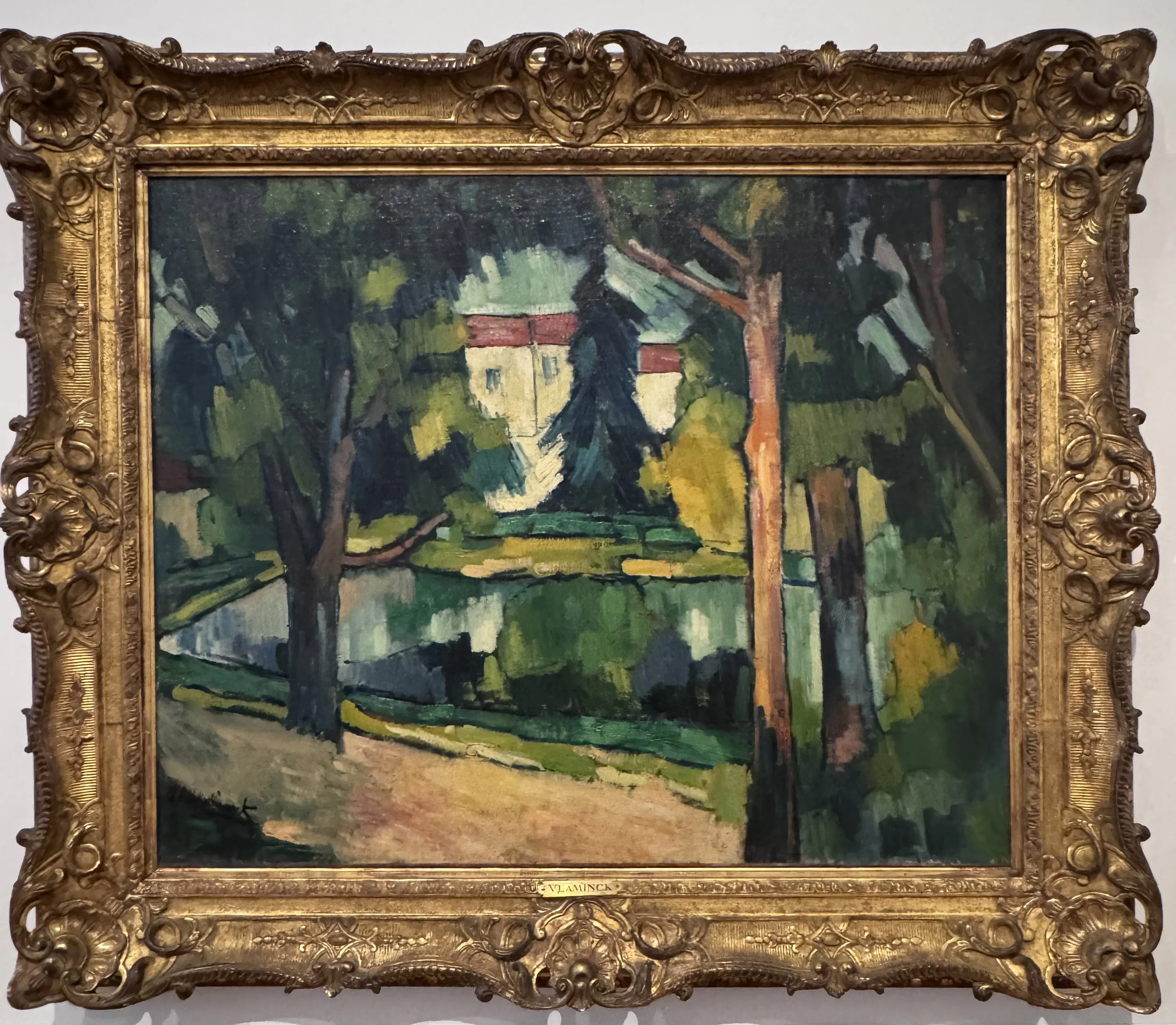
Maurice de Vlaminck , La Maison de Chatou, 1908
Adolphe Potter
The last painting I wanted to share is by a lesser-known Swiss artist, Adolphe Potter, who studied in France and absorbed the tonal realism and poetic rural sensibility of the Barbizon School painters including Corot and Daubigny. His large, somewhat melancholy painting Coucher de soleil en Camargue has the moodiness and diffused light of a Corot. Also, can we talk about the frame? They sure don’t make frames like that any more. It’s absolutely perfect for this painting with the soft golden glow of the frame bringing out the golden highlights of the painting..
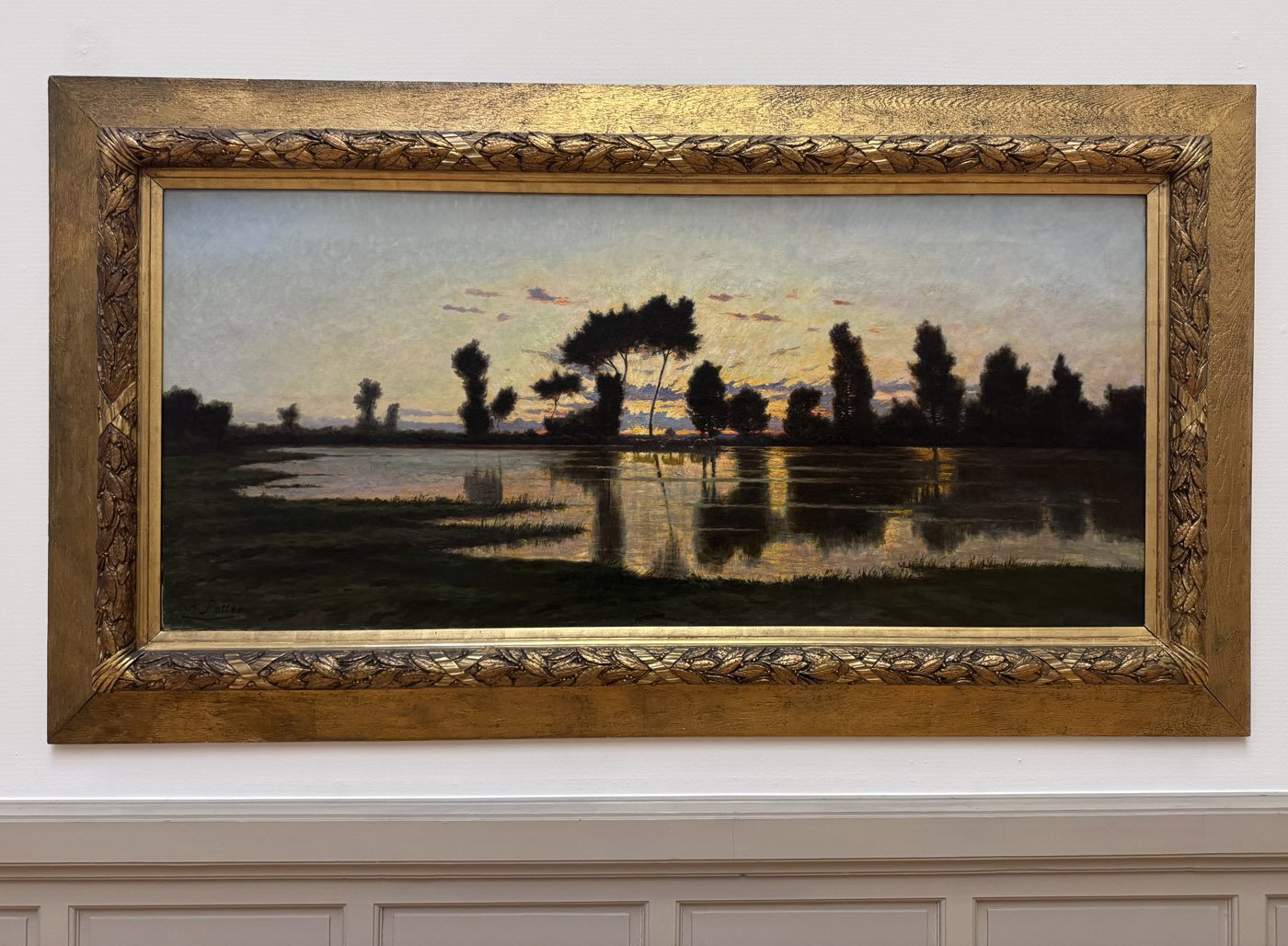
Adolphe Potter, Coucher de soleil en Camargue, 1895
If you enjoy reading my blog posts, please consider signing up for my monthly newsletter here:
https://lp.constantcontactpages.com/sl/4V6bXBh
My newsletter contains additional additional art reviews, studio tips, a peek at works in process, inspiration photos from coastal Maine, and early access to the occasional studio sale.
Other art blogs:
I also have blogs on other European and US art museums. Here are a few examples:
https://www.marciacrumleyart.com/blog/must-see-art-in-oslo
https://www.marciacrumleyart.com/blog/must-see-art-in-paris-blog-2