Must-see art in Oslo
There’s a lot of great art in Oslo – here are my favorite paintings from the National Museum. As you can imagine, many are reminiscent of the works from the Northern Lights exhibit in Buffalo, NY that I wrote about a few months ago: they feature glowing night skies, majestic mountains, and uninhabited, wild landscapes.
Sohlberg: painter of the Norwegian night
Some of the most quietly compelling pieces in the museum are by Norwegian artist Harald Sohlberg (1869–1935). Painted over a century ago, his introspective landscapes feel timeless. Sohlberg was not a prolific painter. He worked slowly and obsessively, revising many of his paintings over a period of years—sometimes decades. You can feel this quiet intensity in his works.
Sohlberg and Munch were contemporaries, but opposites in temperament. Munch was full of manic energy, obsessed with human anguish. Sohlberg was controlled and introspective, and he focused on cosmic stillness. Munch projected emotion outward, while Sohlberg absorbed nature’s sublime beauty inward.
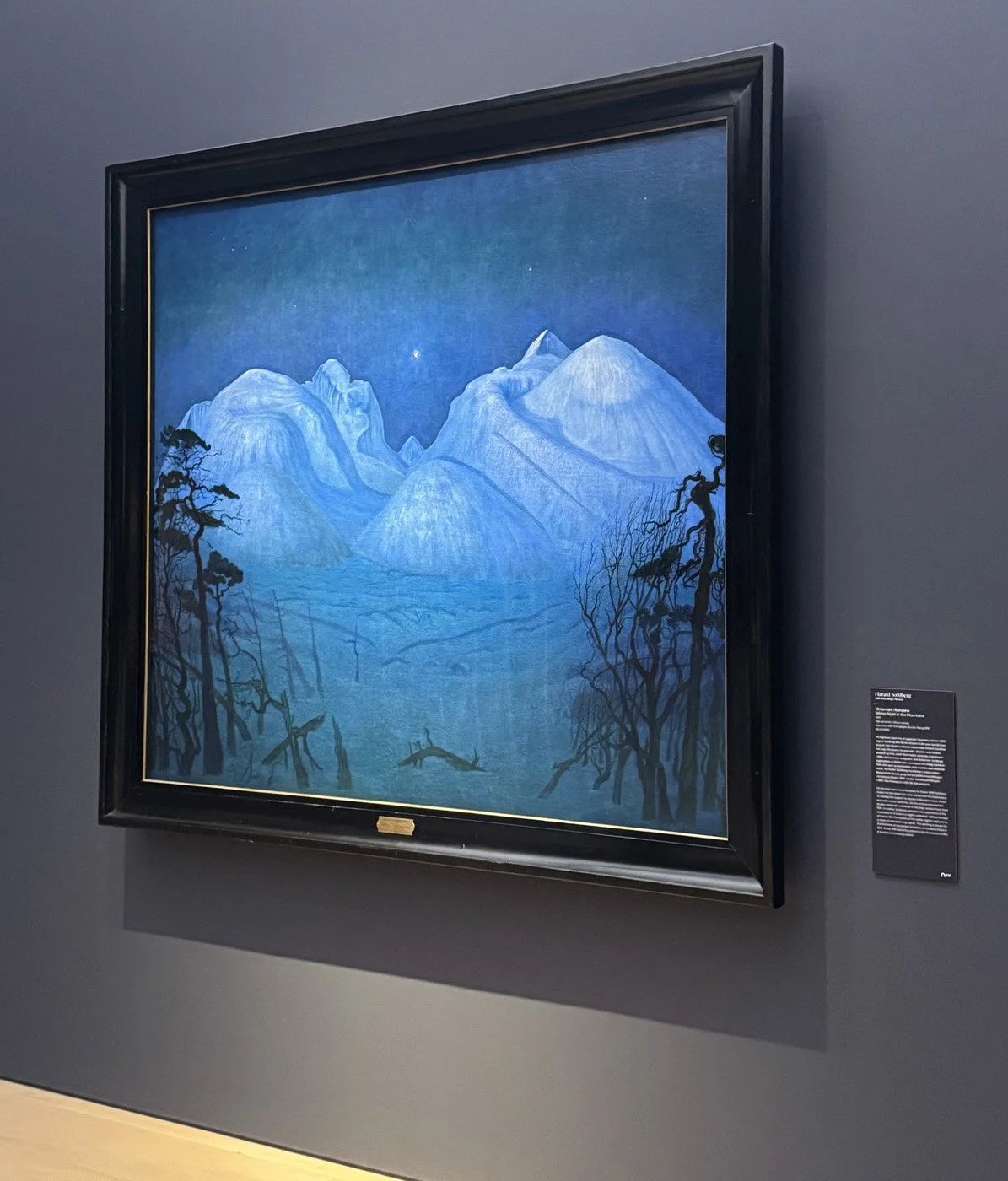
Harald Sohlberg, Winter Night in the Mountains, 1914
Winter Night in the Mountains is Sohlberg’s masterpiece, the perfect depiction of the Blue Hour in Norway (which can last for many hours and is essentially an all-day phenomenon in the far north). The Blue Hour is a distinctive twilight period when the sun is below the horizon but still close enough to bathe the landscape in deep cobalt and indigo light. What makes it special in Norway is how long it lasts, how intense the color becomes, and how strongly it shapes visual culture, art, and daily life. More than just a specific moment in time, the blue hour is a mood: a feeling of quiet, introspection, and reflection.
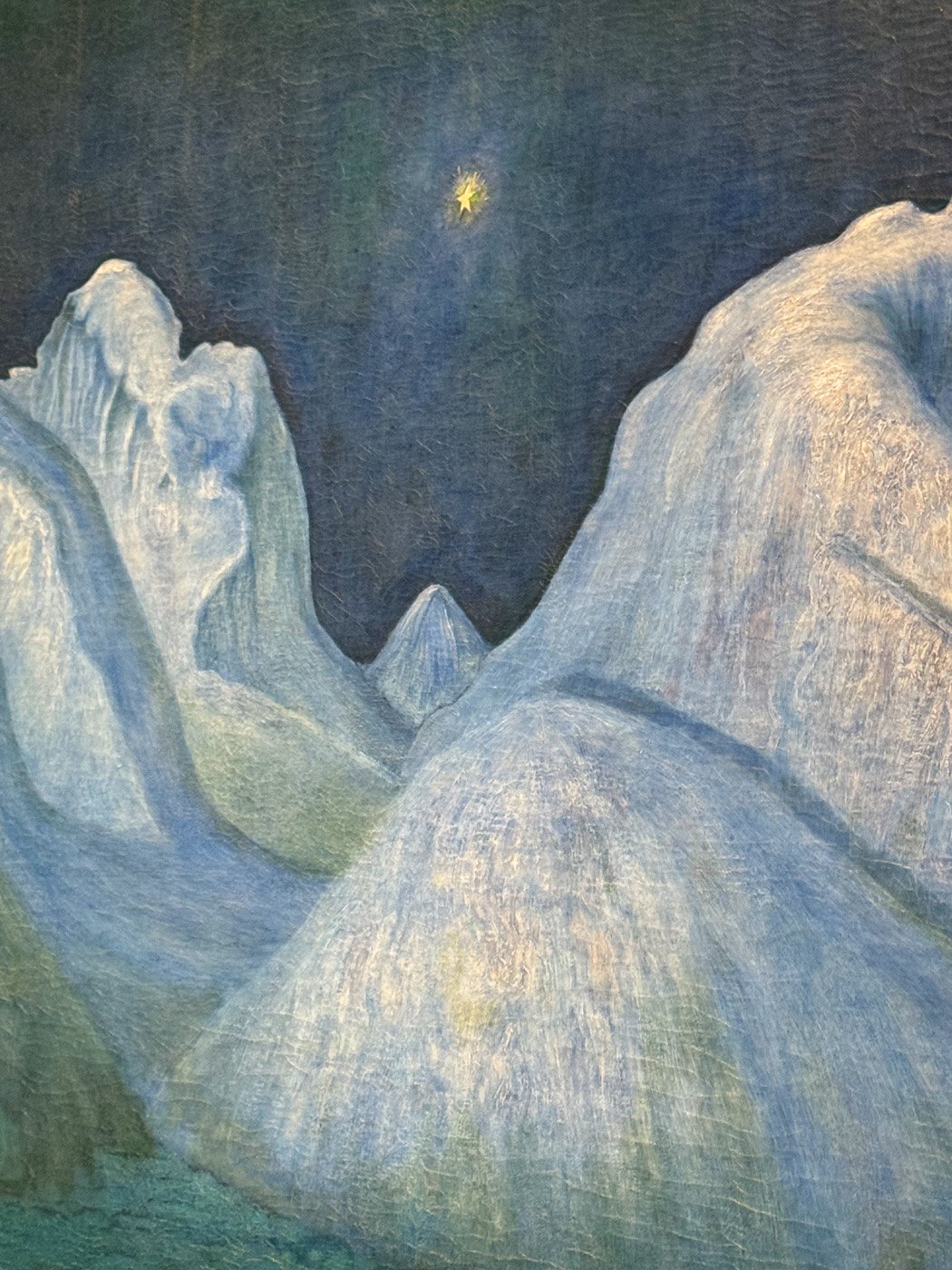
Detail shot from Sohlberg’s Winter Night in the Mountains
Another fabulous Sohlberg painting is Evening Glow (Natteglød in Norwegian). The Norwegian title is important as it translates to glow or ember – it’s all about the glowing warm reds, oranges and pinks that linger after the sun has set and darkness has arrived, like coals in a dying fire.
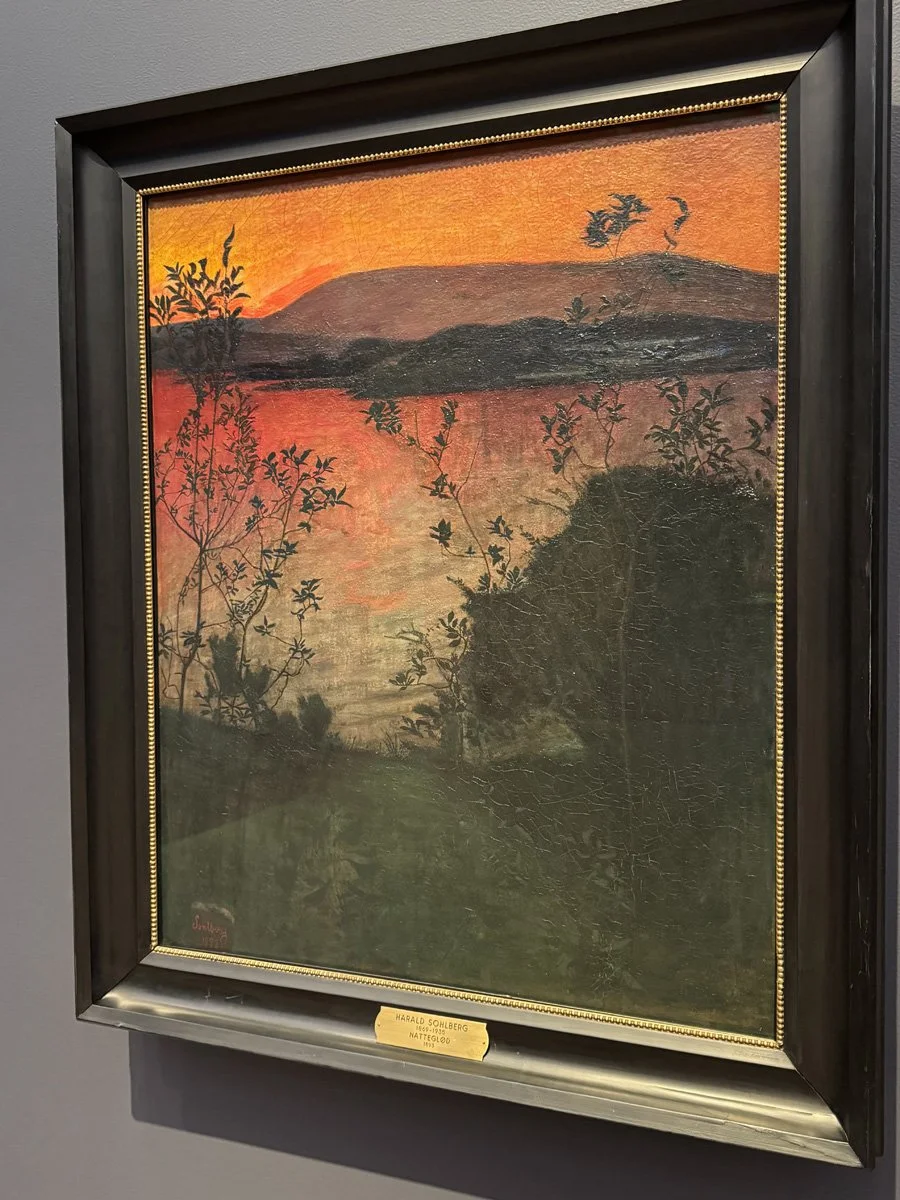
Harald Sohlberg, Evening Glow (Natteglød), 1893
Monet paints Norway
Claude Monet spent about two months painting in Norway in the winter of 1895. Monet’s stepson, Jacques Hoschedé, was living near Christiania (now Oslo), and Monet traveled to Norway during the winter of 1895 in part to visit him. But after a short time in Oslo, Monet headed west to the Sandvika area, for the other purpose of his trip was to better understand, and capture in paint, the qualities of snow under different light and atmospheric conditions. Winters in his home at Giverny, France, often had little snow cover; he hoped that northern Norway’s longer, more consistent snow and colder, clearer light would give him fresh material — especially dramatic effets de neige. Before leaving Paris, Monet asked the Norwegian artist Frits Thaulow (who was living in France at the time) for his advice on painting snow.
It was a physically demanding trip, as one could imagine painting outdoors in Norway’s frigid winters would be, but visually rewarding. On a four-day sleigh trip into the mountains, he wrote home to his wife Alice about the extraordinary sights — frozen lakes, snow over a meter deep, and massive frozen waterfalls — and the “endless delight” he found in the Norwegian landscape. But he also wrote about the challenges of painting snow: “The snow creates wondrous effects, but poses immense difficulties.” During his time in Norway, Monet painted about thirteen views of Mount Kolsås, capturing light effects at various times of day from the same general viewpoint. As with his later haystack and Rouen Cathedral series, he didn’t paint the exact same view each time, but focused on exploring variations of light, snow, and weather. In addition to the Mount Kolsås series, Monet painted a number of paintings of Sandvika and its cast-iron Løkke Bridge, as well as a few fjord paintings.
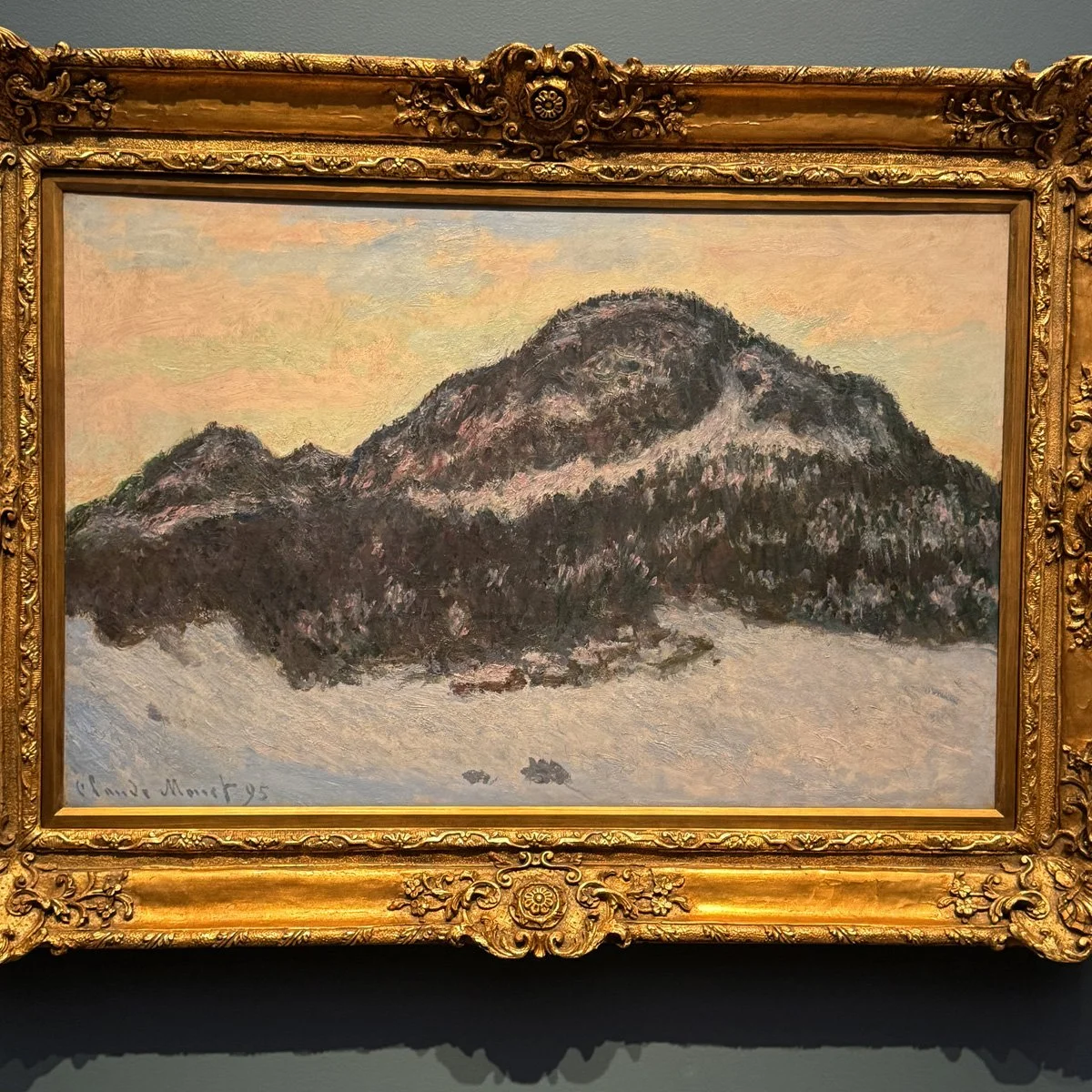
Claude Monet, Mount Kolsås, 1895
Special Offer for Blog Readers
If you’re reading this blog, chances are you love art almost as much as I do. I would be grateful if you took a few minutes to check out my art. I create joyful, layered contemporary landscape paintings in encaustic and mixed media. As a special thank you for reading my art blog, I would like to offer you 20% off any of my paintings. Just use the code BLOG20 at checkout. Please also note that my prices include free shipping within the continental US. Outside of the US, shipping is invoiced separately, at cost.
Nikolai Astrup and country life
Nikolai Astrup grew up on a farm in rural western Norway. Unlike many of his peers, he spent little time abroad, and remained rooted in farm life and local folk traditions. His daily life involved hard work —planting, cutting wood, and tending animals—and straightened financial circumstances. This painting depicts the St. John’s Eve (Jonsok) celebration, traditionally held around June 23–24, marking the summer solstice. It’s a celebration of fertility and light, with the fire a communal annual ritual. The bonfires were lit to protect against evil, encourage crops, and celebrate the peak of the year. The painting shows a group of villagers gathered around a blazing bonfire, participating in a time-honored ritual celebrating humans’ connections to the earth’s cycles.
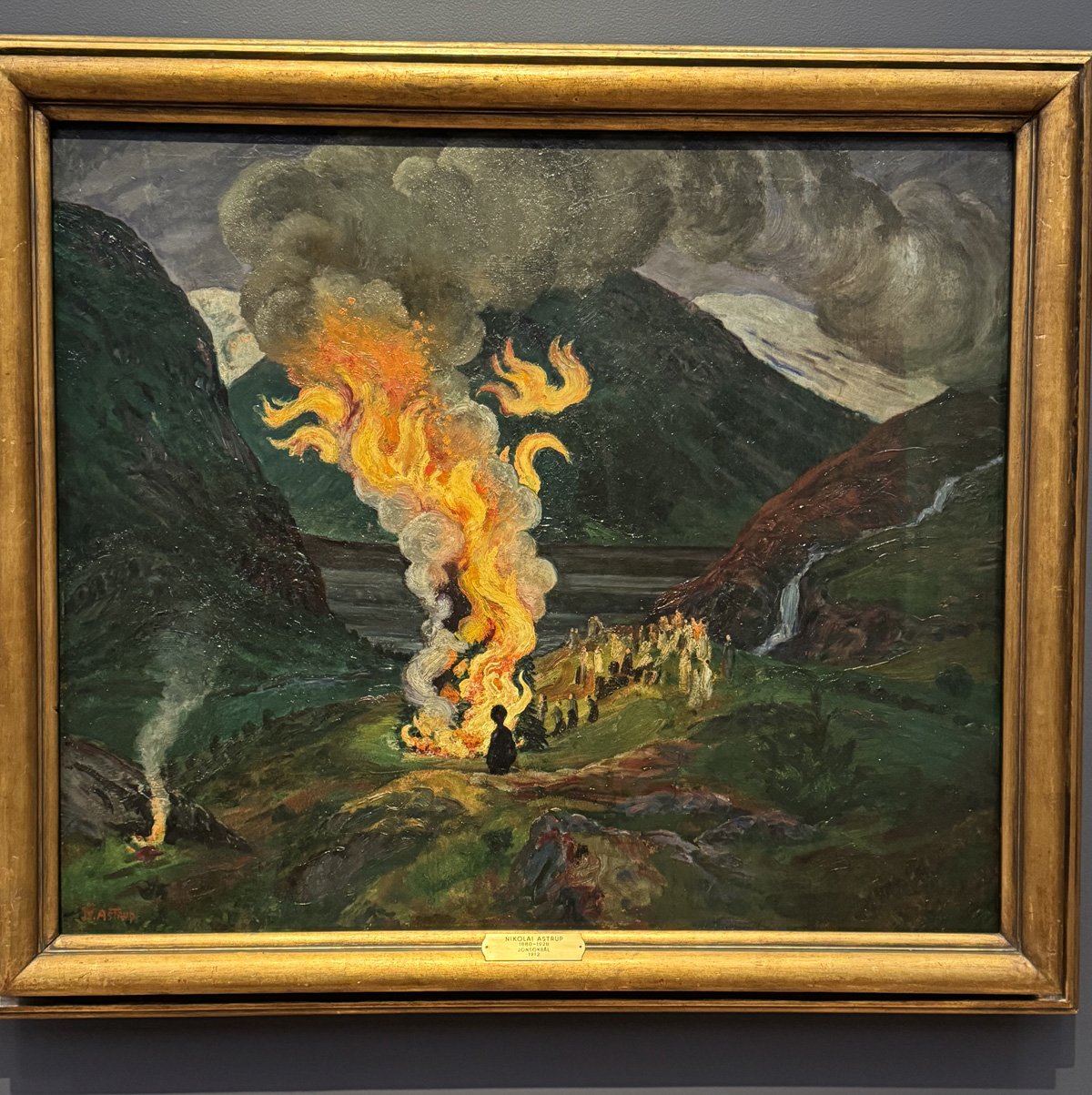
Nikolai Astrup, Midsummer Night Bonfire (Jonsokbäl), 1926
Kittelsen and the White Bear Folktale
Theodor Kittelsen was primarily an illustrator, who worked extensively in ink, watercolor, and wash (used here) to create illustrations for children’s books, especially folk tales. He provided Norway with enduring visual language for trolls, spirits, and animals charged with meaning.
The title of the work is taken from the Norwegian folktale White Bear King Valemon, as retold by the folklorists Asbjornsen and Moe. Kittelsen depicts the king - who has been transformed into a bear - and the princess at a magical moment: "Have you ever sat softer, and have you ever seen clearer?" asks White Bear. "No, never!" says the princess. "Ah! You are the right one," replies the bear. The setting is evocative, with the bear and princess emerging from a snow-covered forest at twilight. The soft watercolour brushwork and subdued colors heighten the mysterious, yet subdued, atmosphere. While the bear is enormous, it is not in the least bit frightening; the princess sits atop the bear serenely, with her eyes closed in complete trust.
This painting is privately owned, and will only be on display until February 2026. I feel lucky to have seen it in person!
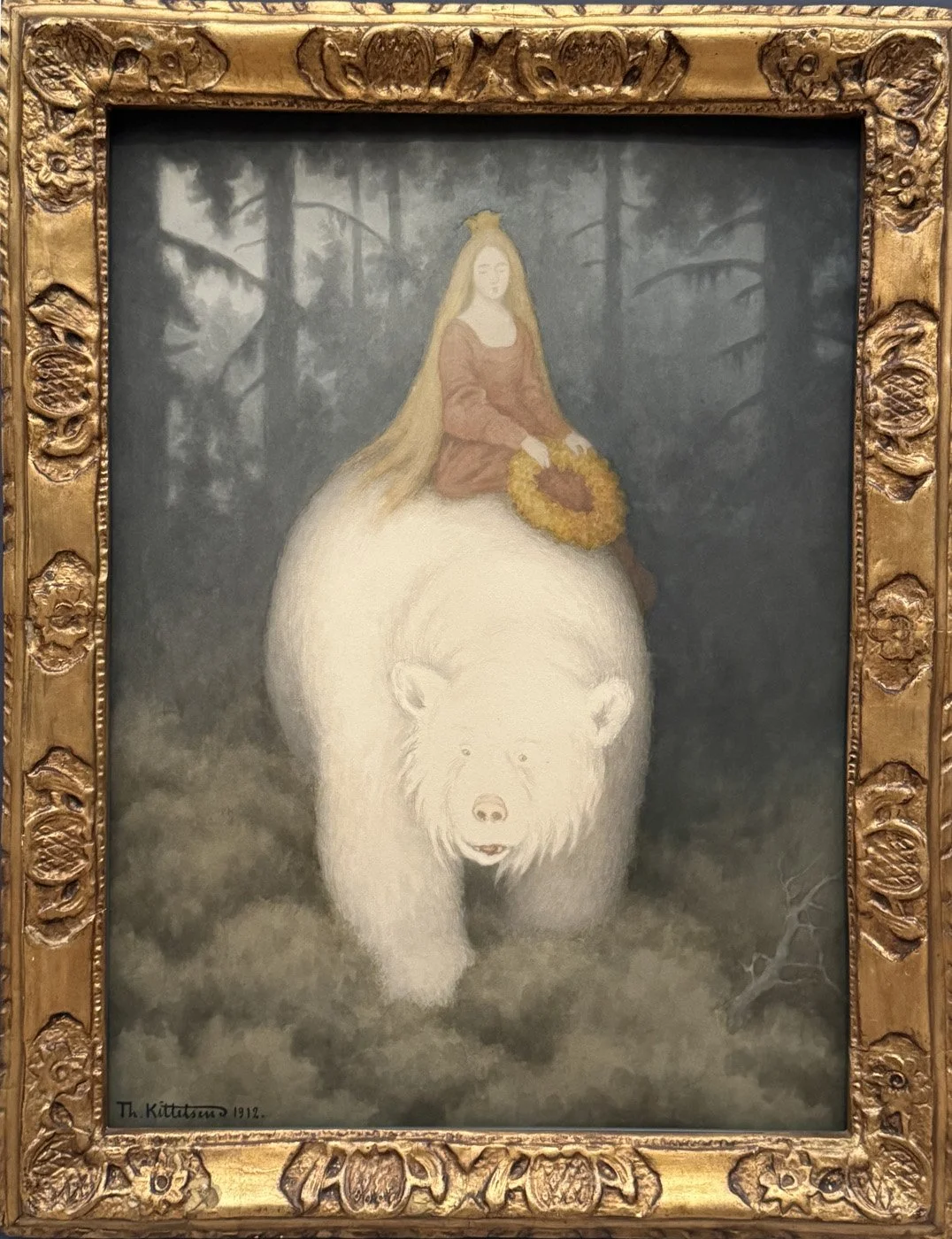
Theodor Kittelsen, White Bear King Valemon, 1912
I’ll be writing about our latest visit to the Munch Museum in Oslo in my next post, but that likely won’t be until some time in January 2026. In the meantime, if you have an interest in Scandinavian art, my post on the Northern Lights exhibit at Buffalo AKG may be of interest. This exhibit includes Finnish, Norwegian, and Swedish artists alongside Canadian Group of Seven painters (who were inspired by a show of Scandinavian art at the Buffalo museum in 1913.) All of the artists in Norther Lights share a love for the compelling beauty of the North and its extreme climate, primeval forest, and magical night skies – nature at its most wild and magnificent.
Link to Northern Lights blog: https://www.marciacrumleyart.com/blog/must-see-art-in-buffalo-ny