Must-See Art: San Francisco
The Monet and Venice exhibit at the de Young museum in San Francisco, on view through July 26, 2026, is truly a feast for the eyes. Monet and Venice marks the biggest collection of Monet's Venice paintings under one roof since his original exhibition of them in 1912. In addition to 21 (out of the 37 that he painted) Monet paintings of Venice, the show includes Venice scenes from other greats such as Whistler, Renoir, Sargent, Turner, and Signac. Monet’s Venice canal paintings feature both well-known landmarks like the church of San Giorgio Maggiore as well as private palazzos, all bathed in a soft, hazy light he described as the enveloppe.
While I was familiar with a few of Monet's Venice paintings before seeing this exhibit, I had no idea how important his trip to Venice was to his artistic legacy. Monet traveled there with his second wife, Alice, in 1908, when he was sixty-eight. He was discouraged about his art career and experiencing significant self-doubt, as his dealer had told him his recent water lily paintings weren't likely to sell. Captivated by the canal scene in Venice, he painted the reflected color and light dancing across the water from early morning to sunset every day. He was so rejuvenated by Venice and his success at capturing the play of light on water that, when he returned home, he tackled the water lilies in Giverny with renewed focus. They became his obsession for the remainder of his life.
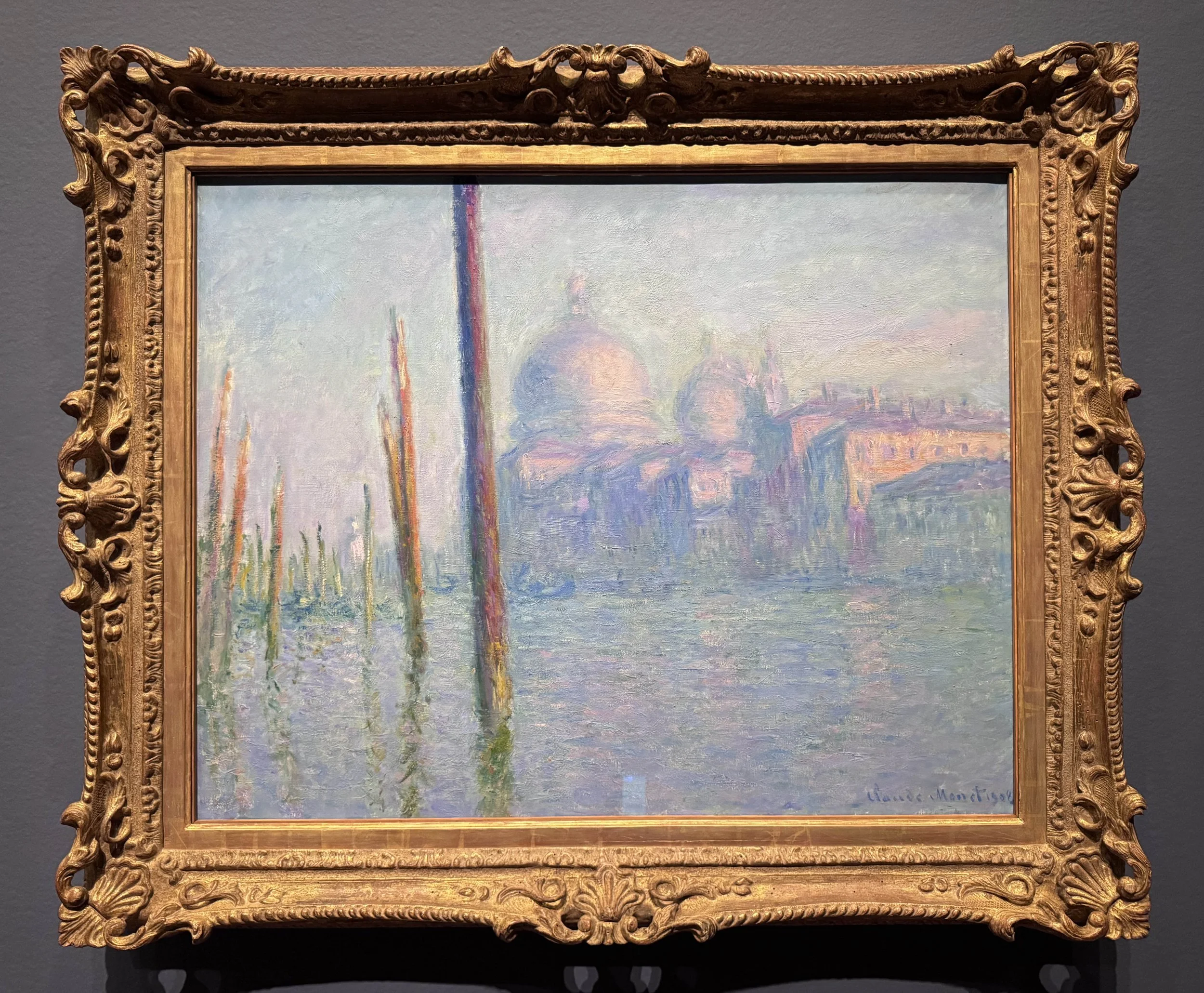
Claude Monet, The Grand Canal, Venice (1908)
The trip that almost wasn’t
Monet didn’t travel to Venice until he was 68, which is rather surprising given how many of the great European artists had captured the canal city in paint, including his contemporaries. He was friends with Renoir, Whistler, Sargent and Signac, so must have been familiar with their Venice paintings. (And had even purchased a painting by Signac of Santa Maria della Salute, which is included in the show.) He may have been intimidated by the quality of his fellow artists’ Venice work. If so, he hid it behind a famous line that is highlighted in the show, declaring Venice “too beautiful to be painted.” The Venice trip was apparently at his wife Alice’s insistence, and was initially only planned to last two weeks. (They stayed two months, and he painted every day.) Monet had brought few painting supplies with him; he had to acquire them all in Venice.
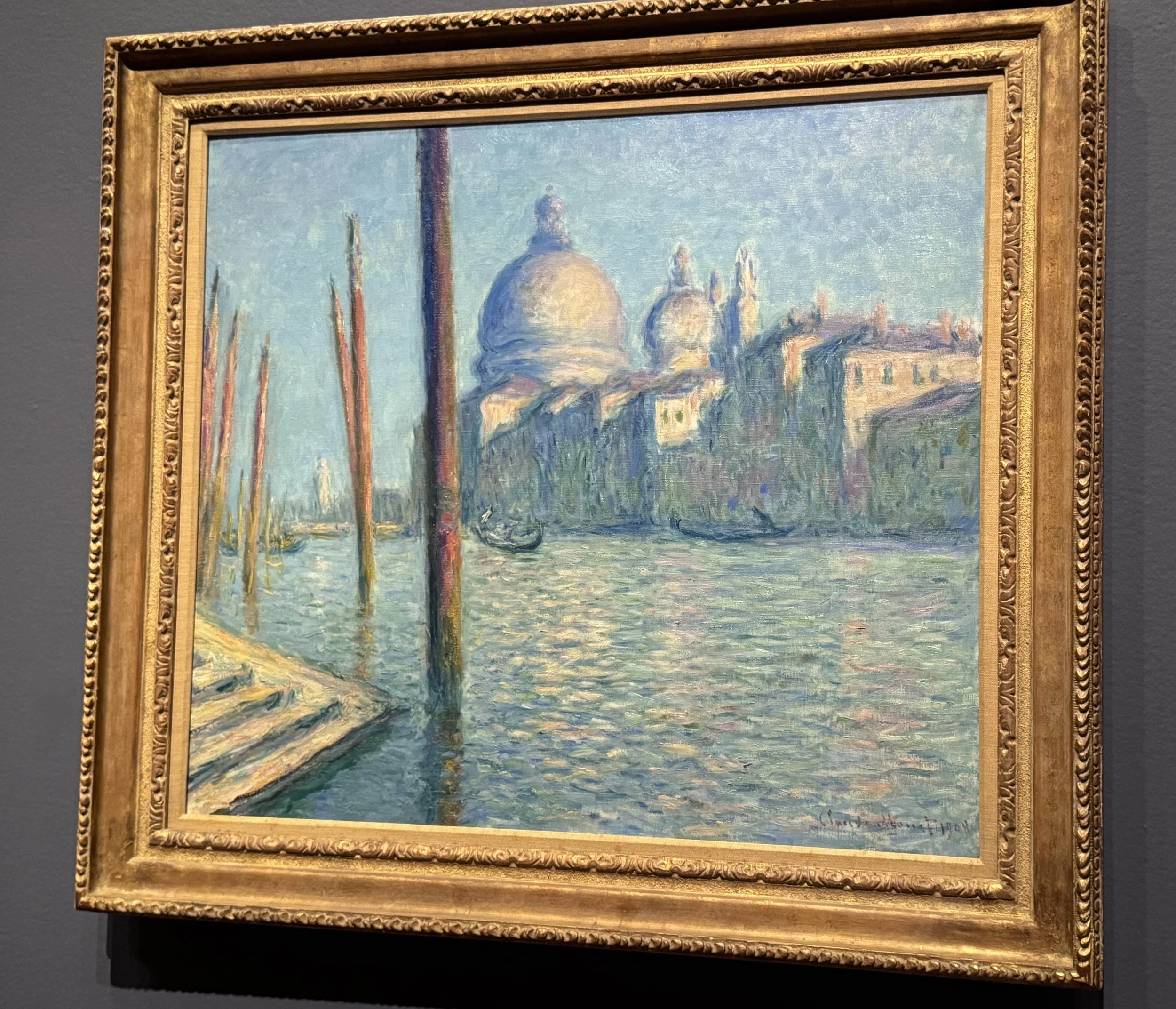
Claude Monet, The Grand Canal, Venice (1908)
There are multiple paintings of some views/subjects, similar to his haystack, Rouen cathedral, and other series. But unlike those series, these repeat paintings weren’t done at different times of day, but rather at similar times of day, with the differences between the paintings being much more subtle. It’s a fun challenge to look closely at these close-to-repetitive paintings and search for subtle variations in tone, warmth, brushwork, and even Monet-chosen frames in each view of the same location. There is a marked absence of people, and no more than one gondola per painting, which, if you’ve ever been to Venice, seems a little more like an empty stage set than the real congested, cacophonous Venice. The focus is on the quality of the light, reflections, and architecture. But the architecture is loosely rendered, more suggested than detailed; it’s as though the haze is thick enough to dissolve the details of the architecture. All of the Venice paintings feature quite loose brushwork, giving these landscapes a more abstract feel than many of his earlier works. Many were painted from Monet’s seat on a gondola on the water, similar to the early days of his career, pre-Giverny, when he painted from a studio boat floating along the Seine.
The Grand Canal paintings above have slight differences in atmosphere, and one noticeable difference in composition; the second one features steps leading down into the water. It’s possible these steps were incorporated after Monet started painting the views from gondola/water level, when the steps would have been more visible. Or, the tide could have been different on the two days he began to sketch/paint these different scenes. Or, he could have added the steps arbitrarily back in the studio, merely for a little compositional variation between the two paintings.
This closeup shot shows how the atmospheric skies and reflections that he captured created drama while blurring detail. The solid wooden mooring post (pali) literally blends into the water, as do the massive granite fronts of the palazzi that he painted.
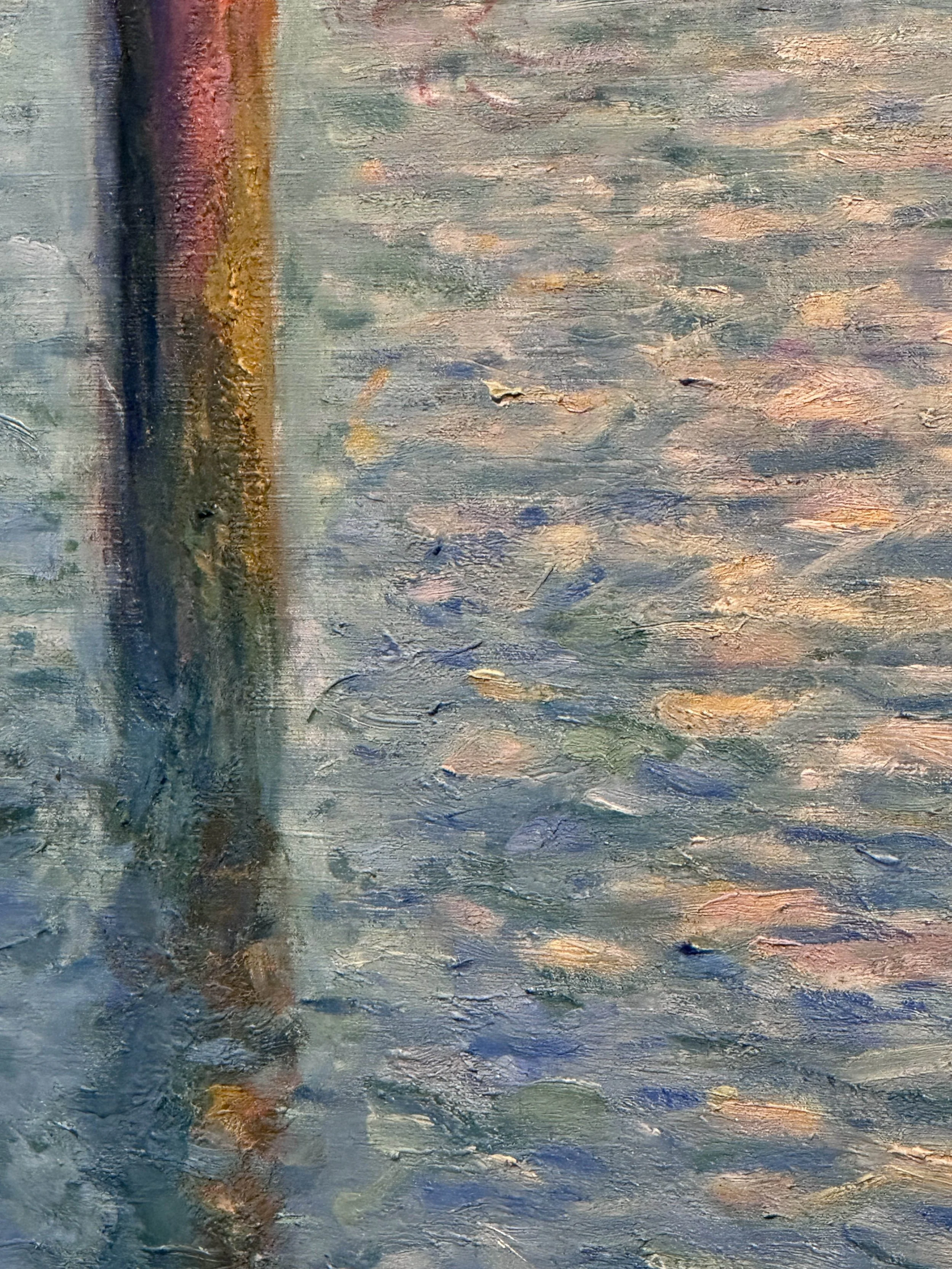
Claude Monet, The Grand Canal, Venice (1908), detail
Venice Landmarks
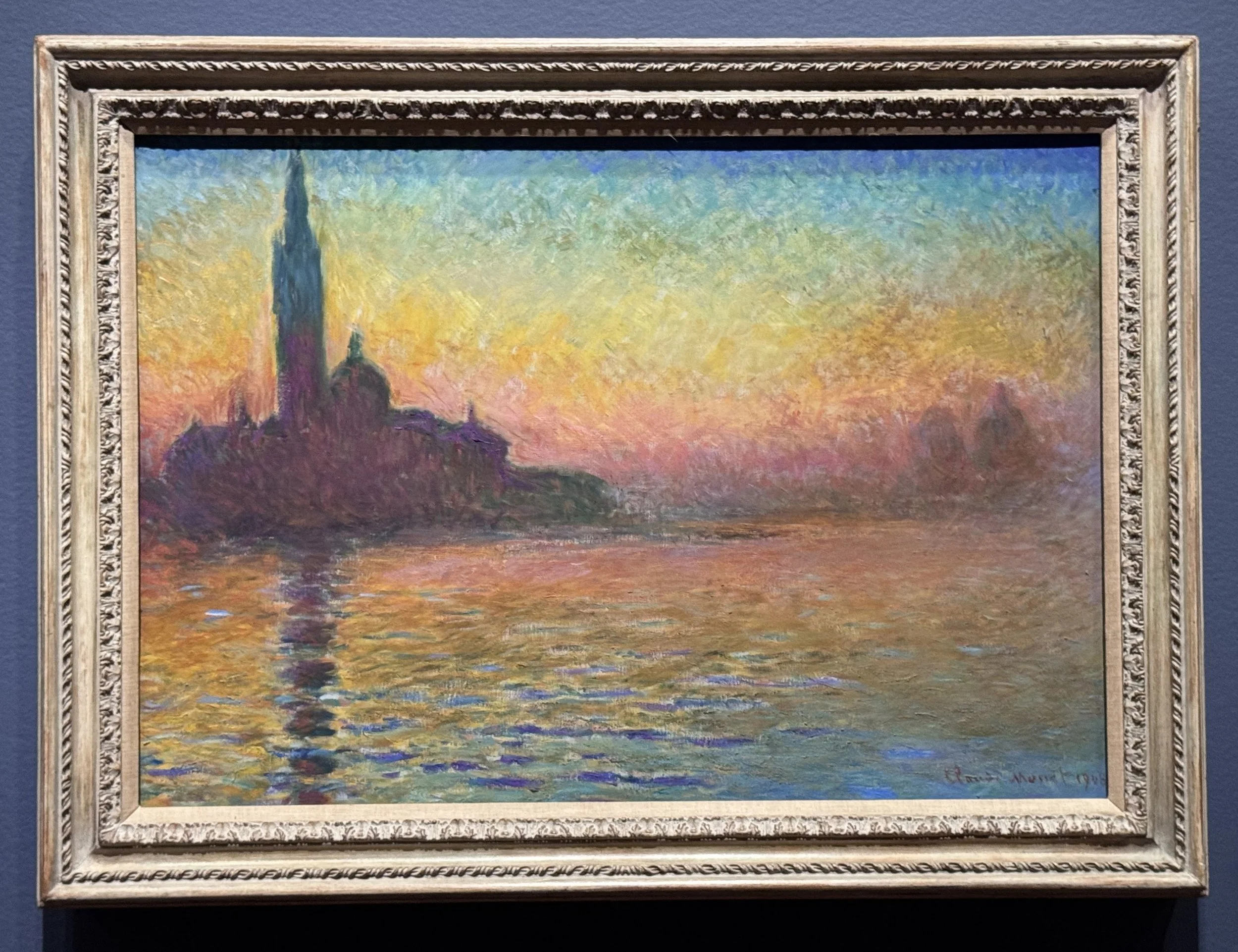
Claude Monet, San Giorgio Maggiore at Dusk (1908)
Landmarks Monet painted include San Giorgio Maggiore at dusk. With the sun setting behind the church, there is no visible architectural detail at all, just the instantly recognizable silhouette of this famous church and its bell tower. The building is less important than the dazzling light surrounding it, and the vivid violet, blue, gold and rose sky colors reflecting across the calm surface of the water. This painting, like many of Monet’s Venice paintings, was completed largely in France. Monet carried unfinished canvases and sketches back with him, and many were completed after his wife Alice’s death in 1911.
The plum-colored reflections of the church contrast beautifully with the gold sky reflections.
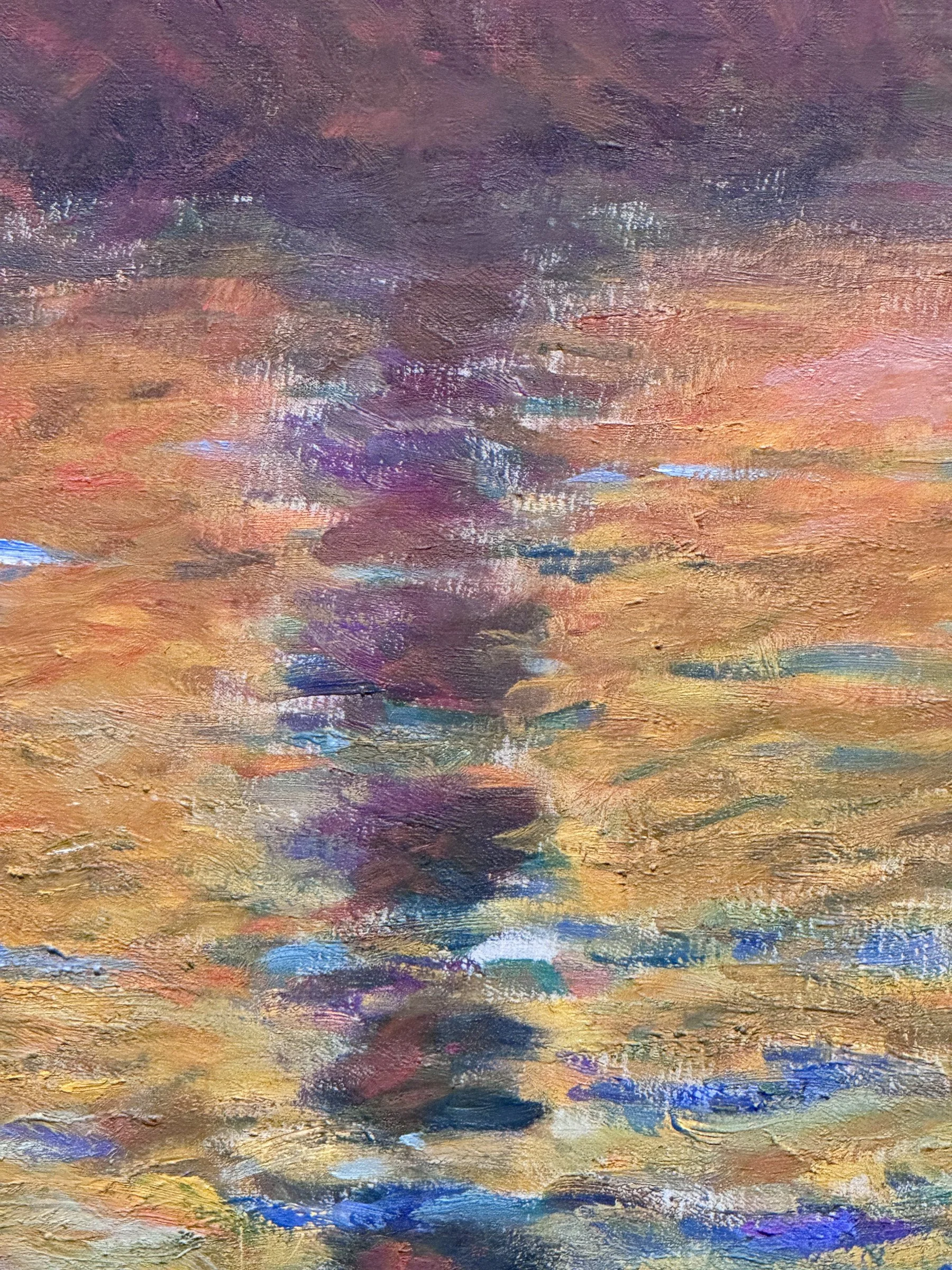
Claude Monet, San Giorgio Maggiore at Dusk (1908), detail
Palatial Private Residences (Palazzi)
Monet painted several versions of the Palazzo Dario, a 15th Century palace noted for its circular stone medallions on the front. The Palazzo was directly opposite the Palazzo Barbaro where Monet was staying. Here, a lone gondola features prominently, as it does in may of his palazzo paintings. While some have commented the lone, dark shape may reflect his grief at being alone after his wife’s death, many of the palazzo and lone gondola paintings, including this one, were completed before her death. It is more likely a visual device employed to provide demarcation between the palazzo and the water, without having to show the entire water line itself. Having a wooden mooring post dissolve into the water is one thing; having a huge, weighty stone structure dissolve completely into the water is another.
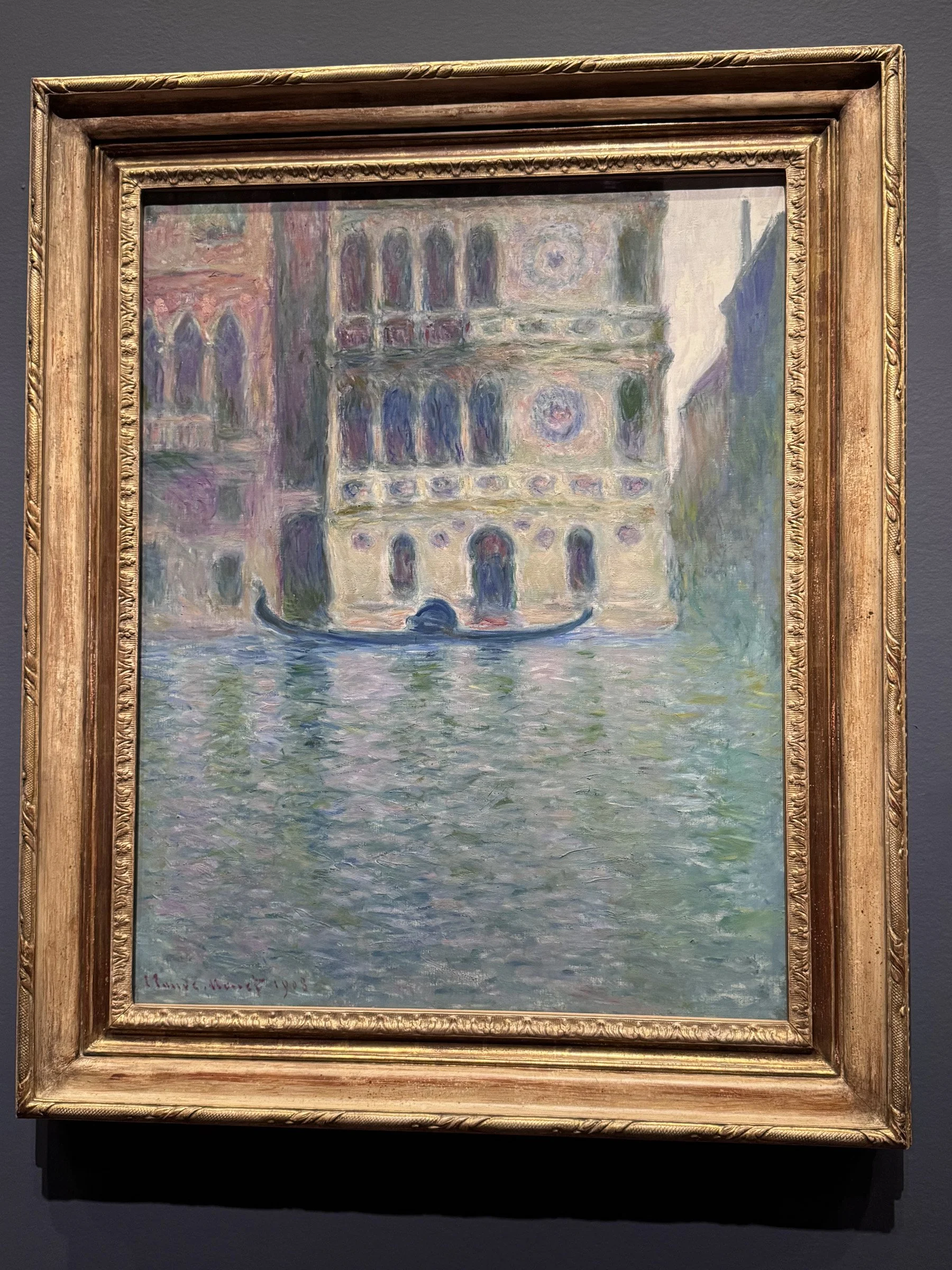
Claude Monet, The Palazzo Dario (1908)
This closeup shows how loosely painted these architectural renderings were.
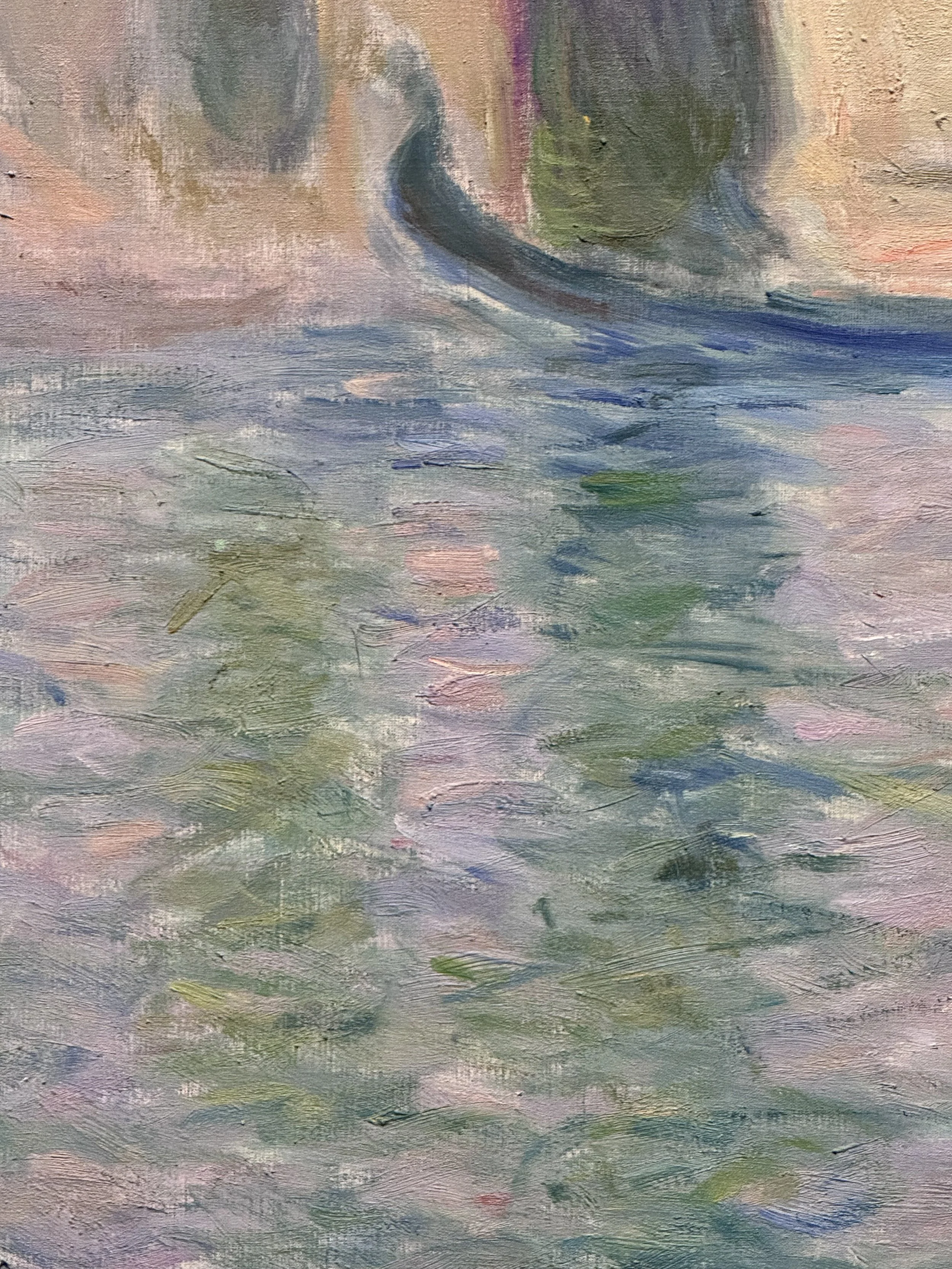
Claude Monet, The Palazzo Dario (1908), detail
An interesting side note: While well-known in Monet’s time for its distinct architectural features, the Palazzo Dario became notorious in later centuries after a series of owners experienced tragedies including suicides, murders, tragic accidents and financial ruin. You can learn more about the Palazzo’s history and tour the absolutely gorgeous interior here: Country Life article on Palazzo Dario
With every one of the Palazzo paintings I was amazed by how much impression of detail Monet could convince us to see, without actually having painted in much detail. It’s as though he were deceiving the viewer’s eye – a sleight of hand using a paintbrush rather than a deck of cards. One painting where this really stood out was the Palazzo Contarini.
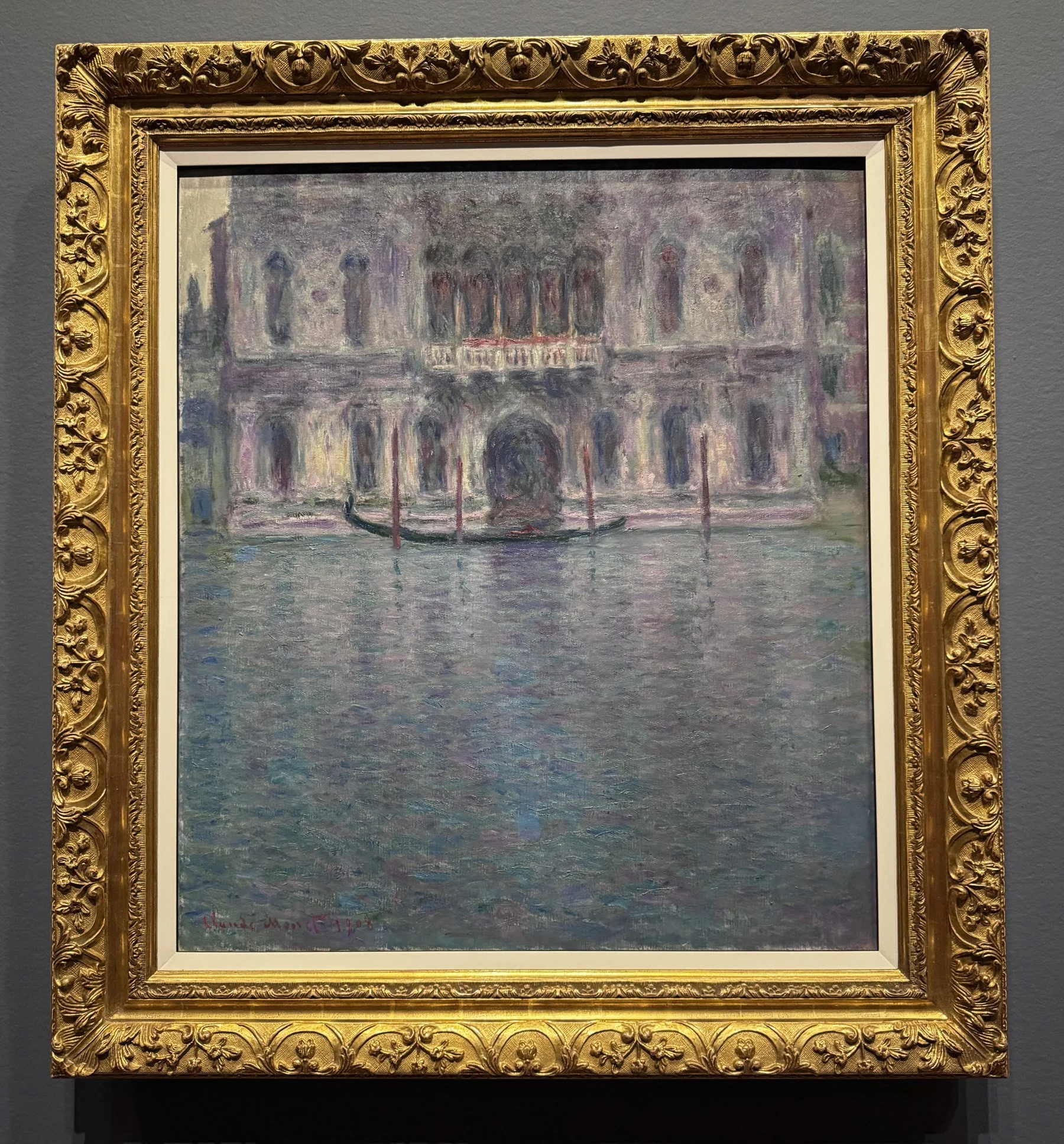
Claude Monet, The Palazzo Contarini (1908)
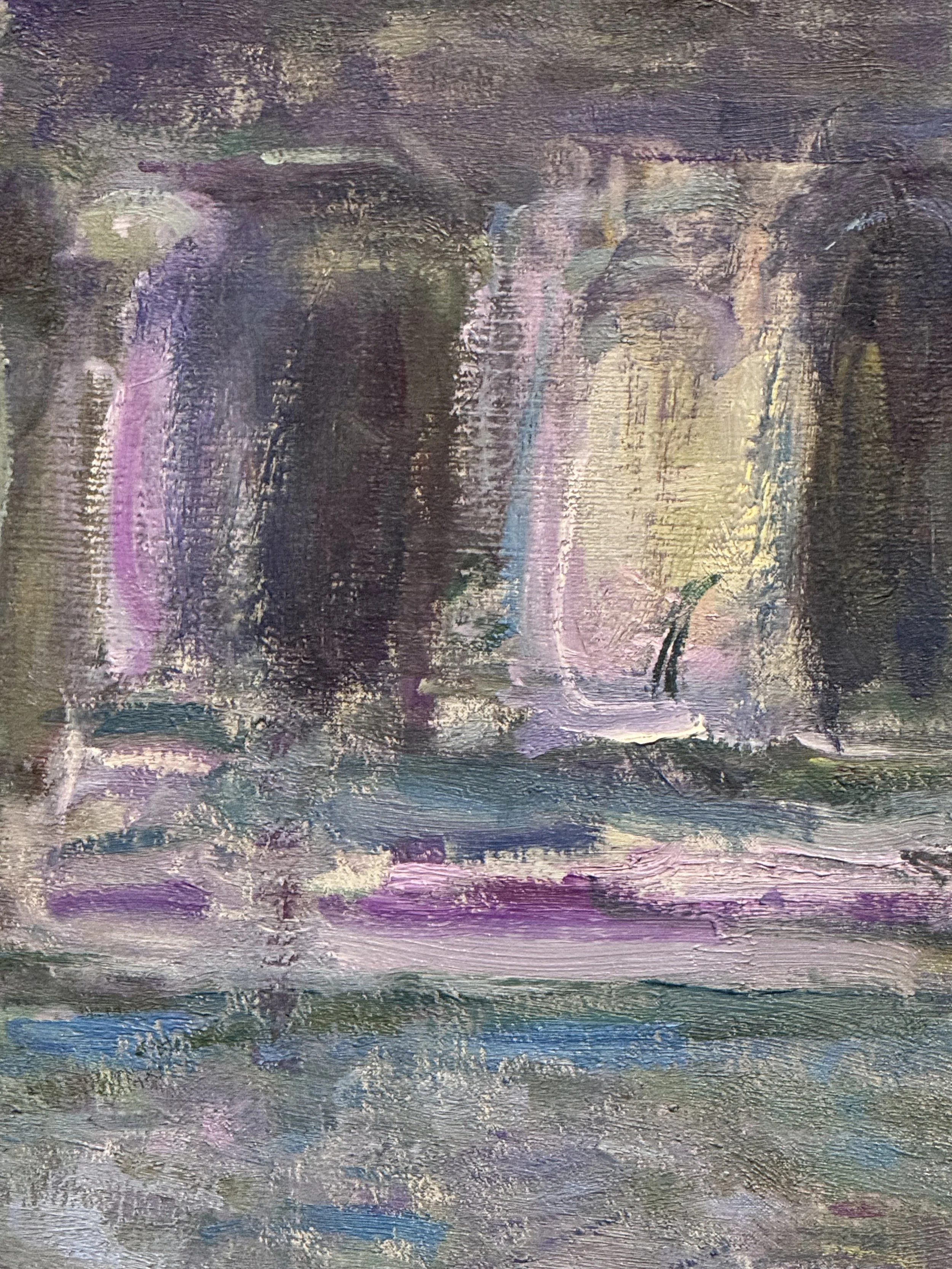
Claude Monet, The Palazzo Contarini (1908), detail of building facade
Water Lily Paintings
The grand finale of the show is two water lily paintings that were created after the Venice trip. One is the de Young’s own Water Lilies, 1914-1917, which features pink and red lilies suggested by loose swirls of paint. The lily pads are composed of multiple beautiful green hues, and seem to be floating just slightly below the surface of the water, with few shadows or visible edges. It’s all soothing and serene, in marked contrast to the war raging in Europe at the time.
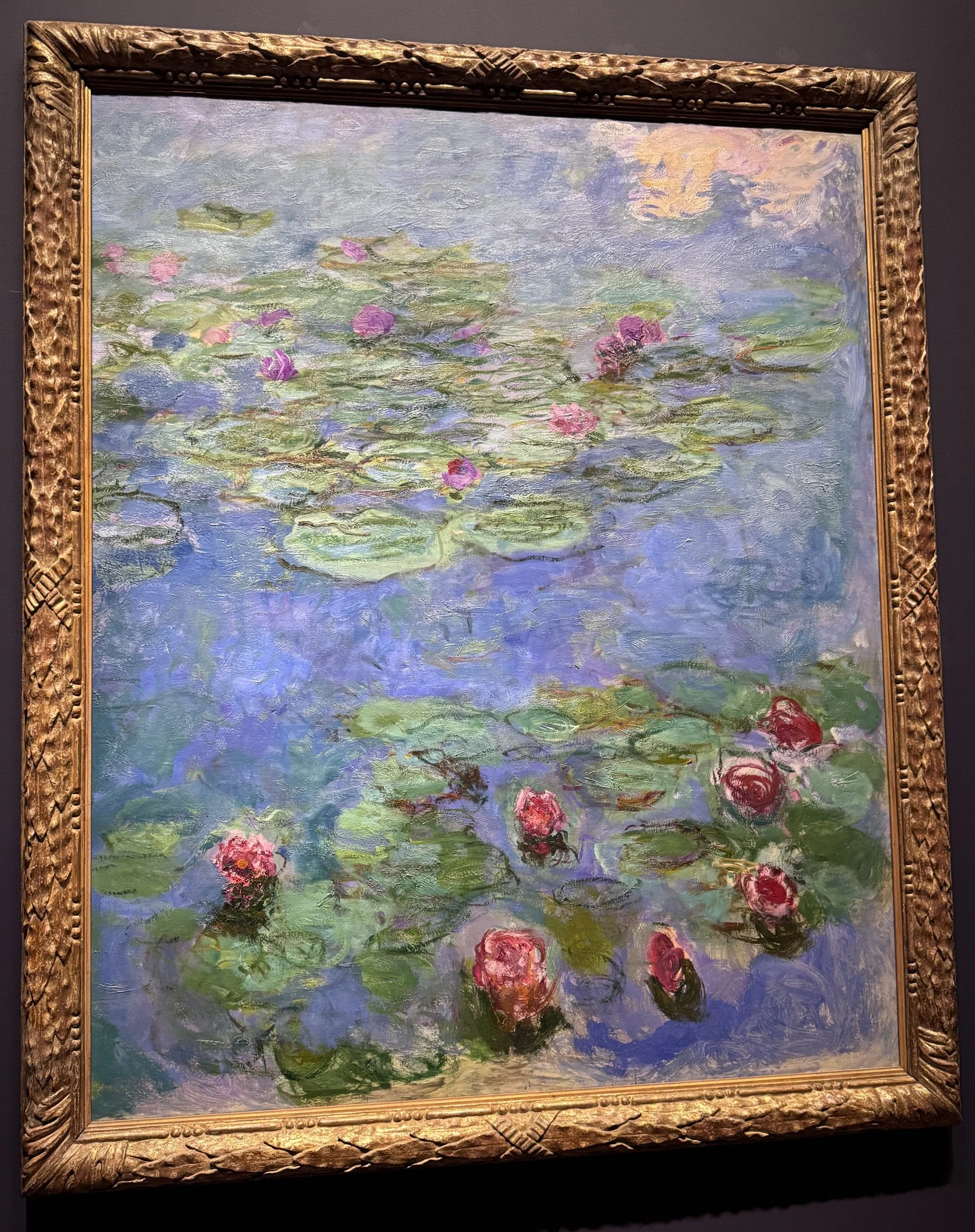
Claude Monet, Water Lilies (1914-1917)
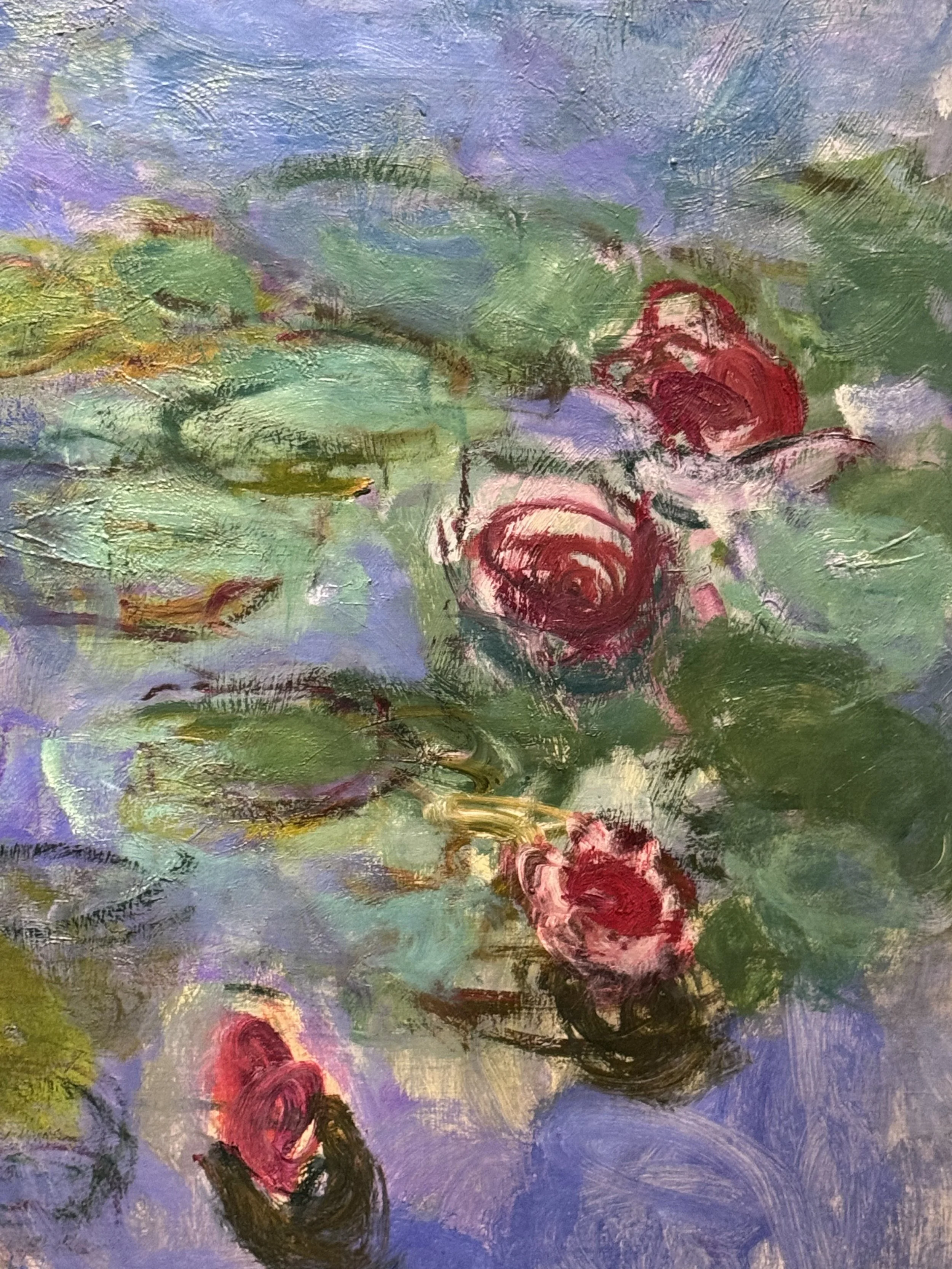
Claude Monet, Water Lilies (1914-1917), detail
The second water lily painting features even more-loosely-rendered lilies and pads. The deep blues, purples and greens in the pads, water, and reflections all meld together and push this painting close to pure abstraction.
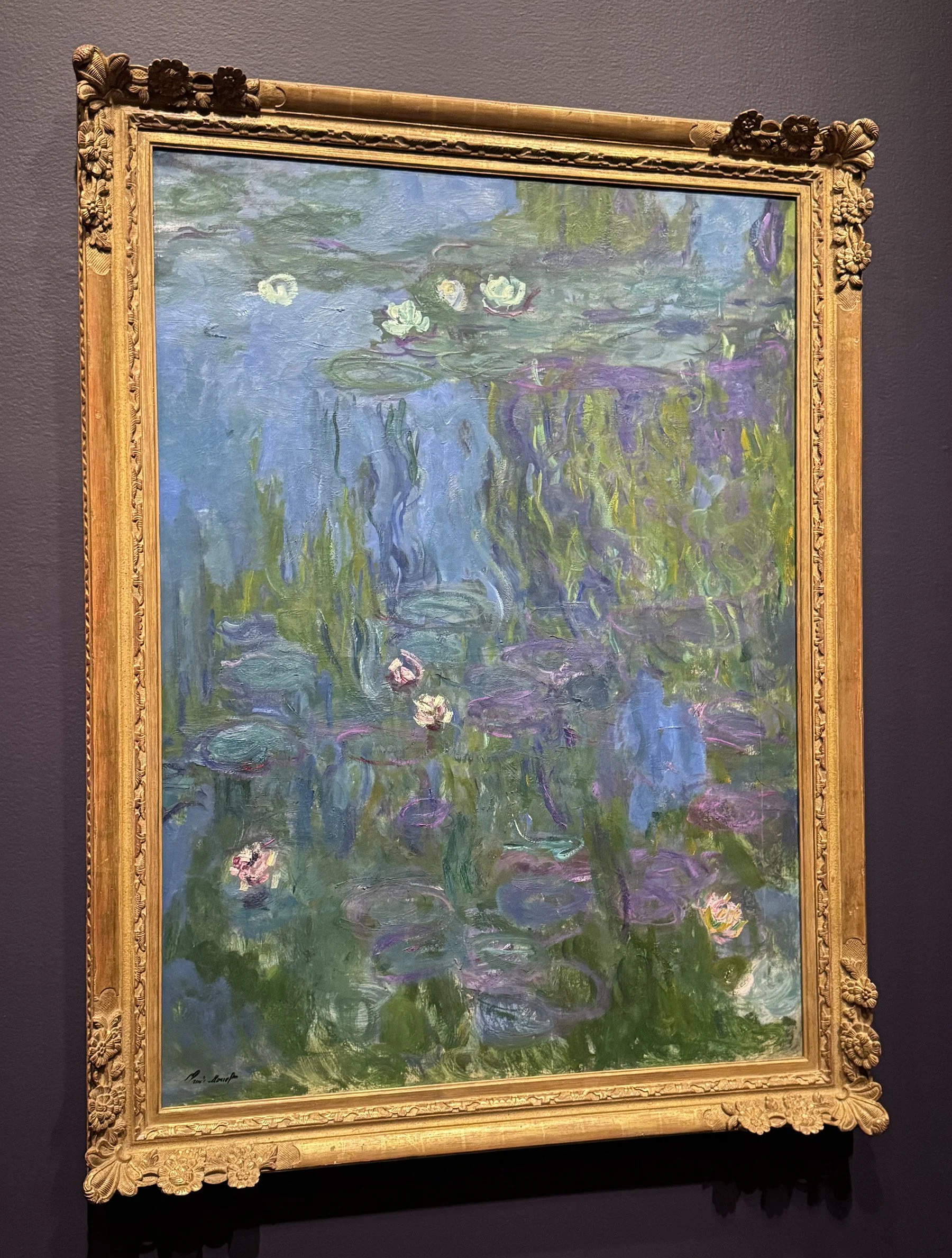
Claude Monet, Water Lilies (1914-1917)
In sum, the Monet and Venice show is well worth the short trip outside of San Francisco center to see. If you’re feeling adventurous, you can do what we did and travel via a driverless Waymo. (Rest assured, you’re on residential streets all the way, not a freeway.) Waymos are virtually everywhere in San Francisco these days (we were sometimes in a row of two or three of them) and one arrived very quickly when we requested a ride back to our hotel from the de Young.
Special Offer for Blog Readers
If you’re reading this blog, chances are you love art almost as much as I do. I would be grateful if you took a few minutes to check out my art. I create joyful, layered contemporary landscape paintings in encaustic and mixed media. As a special thank you for reading my art blog, I would like to offer you 20% off any of my paintings. Just use the code BLOG20 at checkout. Please also note that my prices include free shipping within the continental US. Outside of the US, shipping is invoiced separately, at cost.