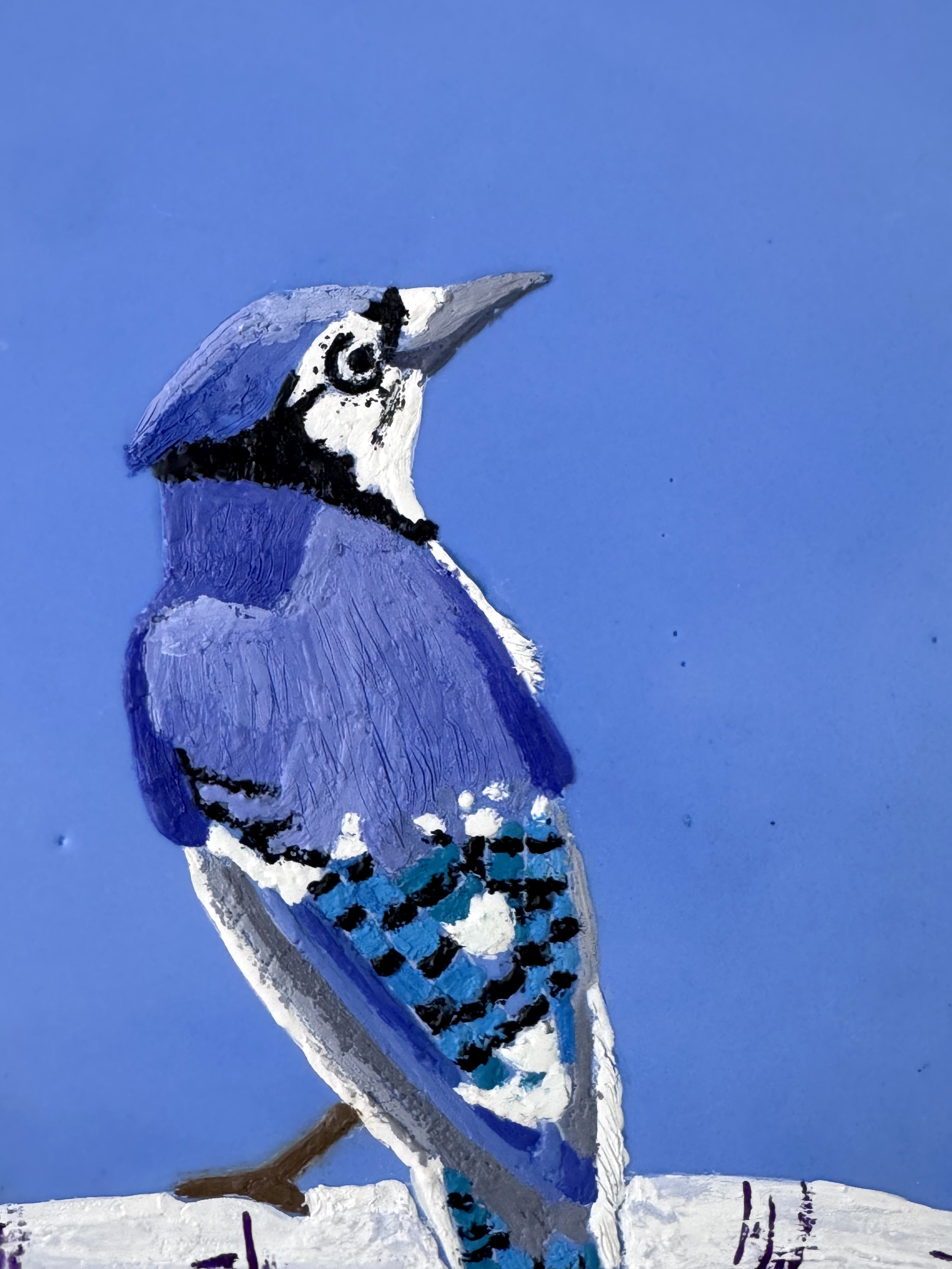
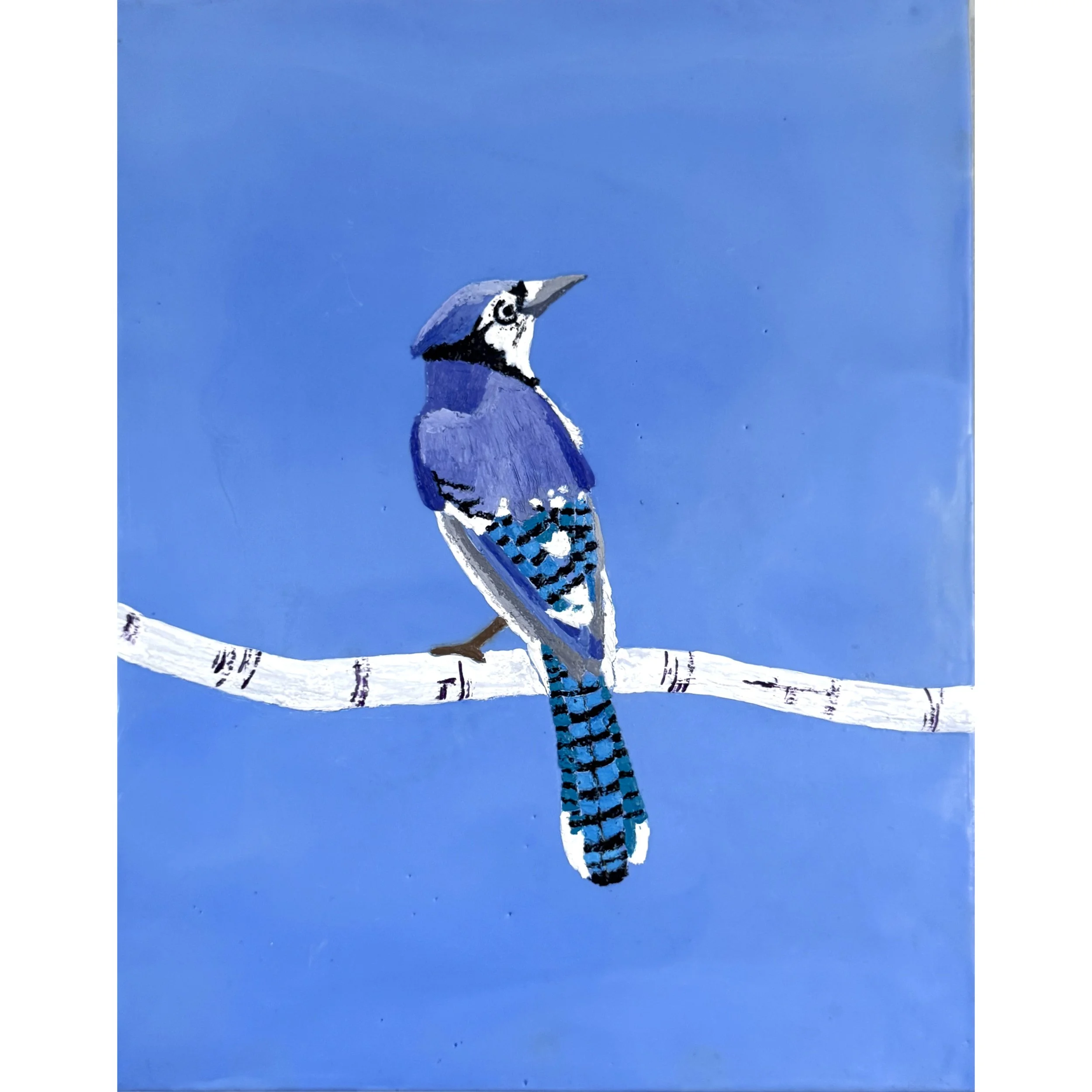

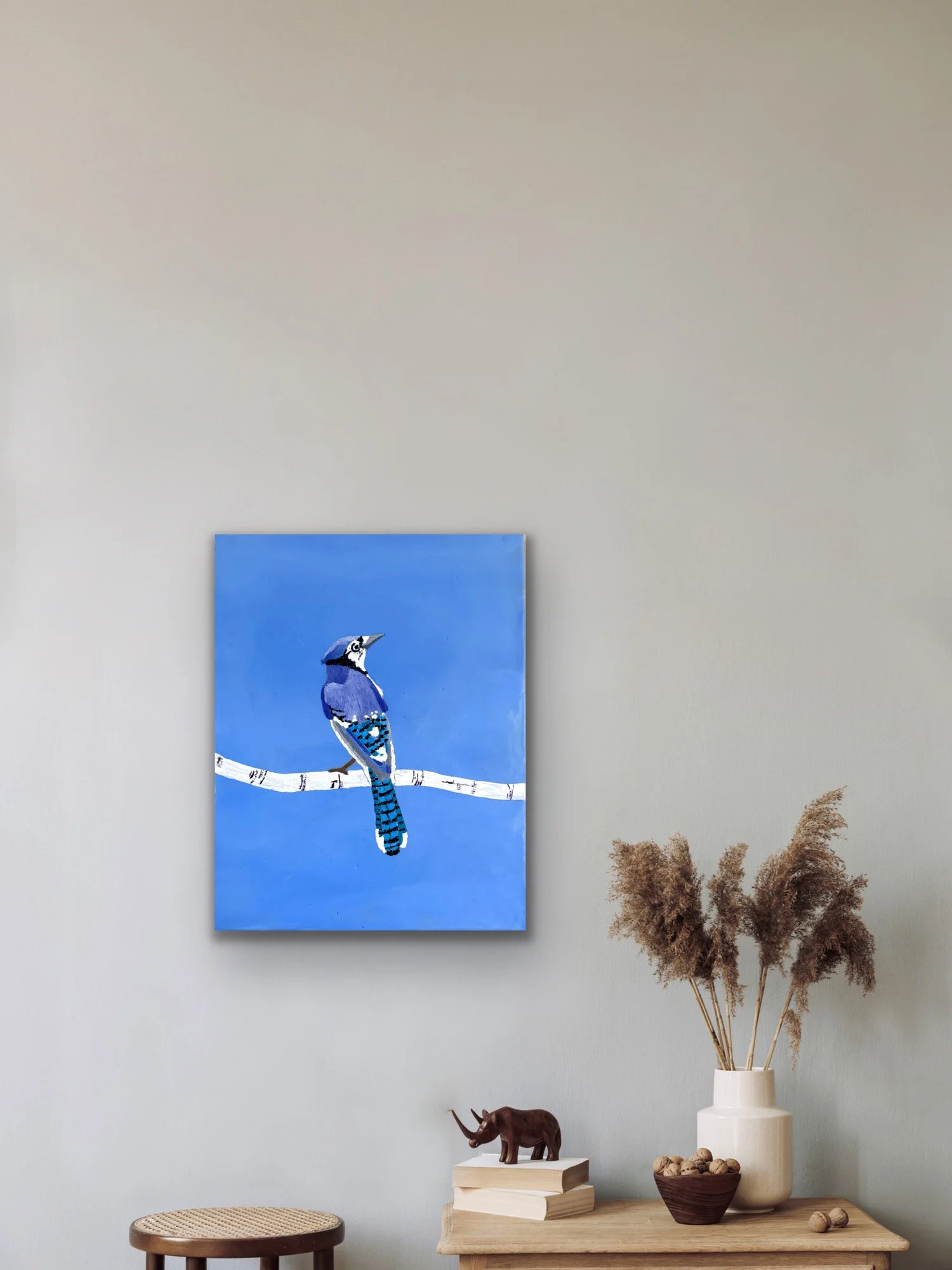
14” x 11” encaustic on panel
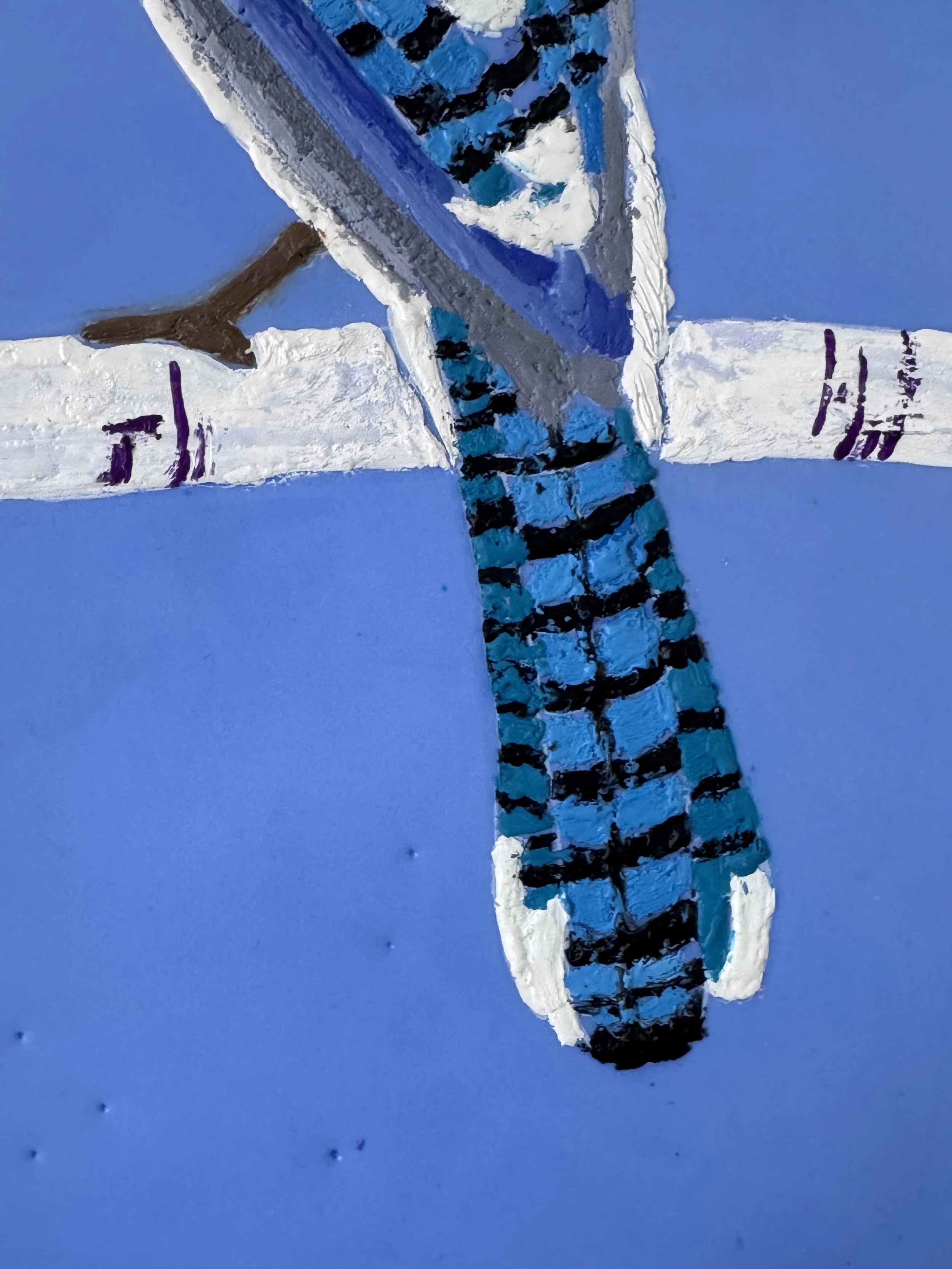
I love blue in every shade, so painting a bluejay was inevitable. This painting, with all of the intricate patterning in the feathers, proved especially challenging to paint in wax. Here are a few fun facts I learned about bluejays. Their feathers aren't actually blue, but brown; we perceive them as blue due to an optical phenomenon called light scattering, where blue light is refracted off air pockets in the feathers while all the other colors are absorbed. This isn't unique to bluejays; it's true for all other blue birds including bluebirds and indigo buntings. What may be unique to bluejays is that they are excellent mimics. When they spot predators, they alert other birds by mimicking the sounds of that predator. They can mimic the sounds of red-tailed hawks, owls, and more.
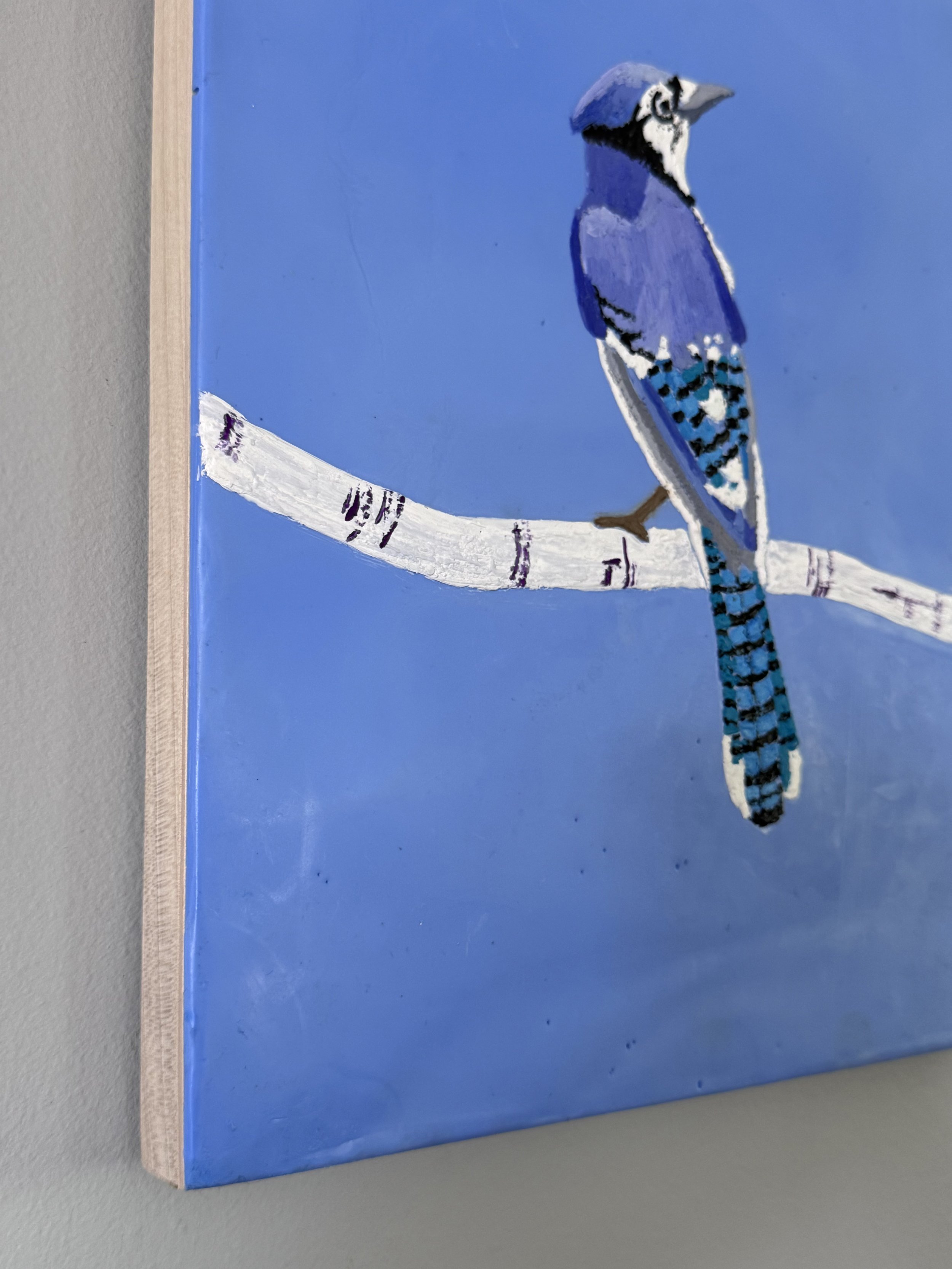
This joyful painting is full of color and texture and will come with hanging hardware to brighten up any room in your home. It is painted on a birch panel, and does not need to be framed. (See side view.)
14” x 11” encaustic on panel
I love blue in every shade, so painting a bluejay was inevitable. This painting, with all of the intricate patterning in the feathers, proved especially challenging to paint in wax. Here are a few fun facts I learned about bluejays. Their feathers aren't actually blue, but brown; we perceive them as blue due to an optical phenomenon called light scattering, where blue light is refracted off air pockets in the feathers while all the other colors are absorbed. This isn't unique to bluejays; it's true for all other blue birds including bluebirds and indigo buntings. What may be unique to bluejays is that they are excellent mimics. When they spot predators, they alert other birds by mimicking the sounds of that predator. They can mimic the sounds of red-tailed hawks, owls, and more.
This joyful painting is full of color and texture and will come with hanging hardware to brighten up any room in your home. It is painted on a birch panel, and does not need to be framed. (See side view.)