I’m not a religious person, but visiting La Sagrada Familia in Barcelona and watching the mesmerizing colors of the stained glass and its reflections illuminate the vaults, pillars, and floor of the basilica was a truly spiritual experience.
Sitting inside the basilica, one experiences an ever-changing light show, as Gaudí designed the stained-glass windows to capitalize on the sun’s path over the course of the day. The Nativity façade, celebrating Jesus's birth, faces east, where the day begins. The windows on this side are colored in cool tones suitable for the dawn light – primarily blues, greens, and a beautiful turquoise. These colors evoke water and peace, bathing the interior in a calm, reflective light during the morning hours. As Gaudí said: “Sunshine is the best painter!”
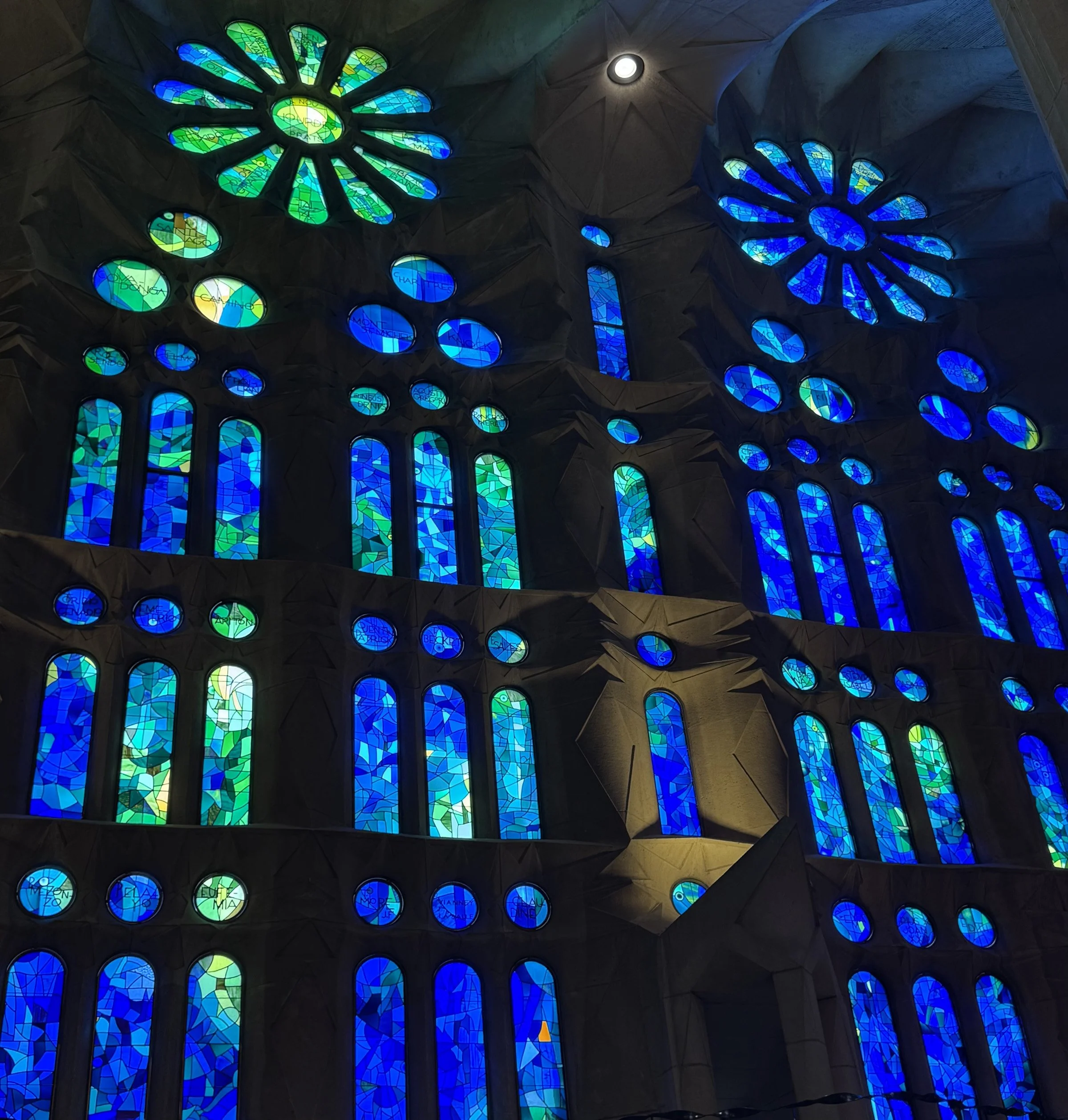
Blue and green stained-glass windows on Sagrada Familia’s Nativity facade.
The sun sets in the west, on the Passion façade, which commemorates the end of Jesus's life. Here, the glass is full of red and orange tones, evoking the colors of sunset but also the blood of Jesus Christ, the warmth of divine love, and the fire of the resurrection. On both sides, the glass casts colorful light onto the sandstone vault and pillars of the church at different times of day.
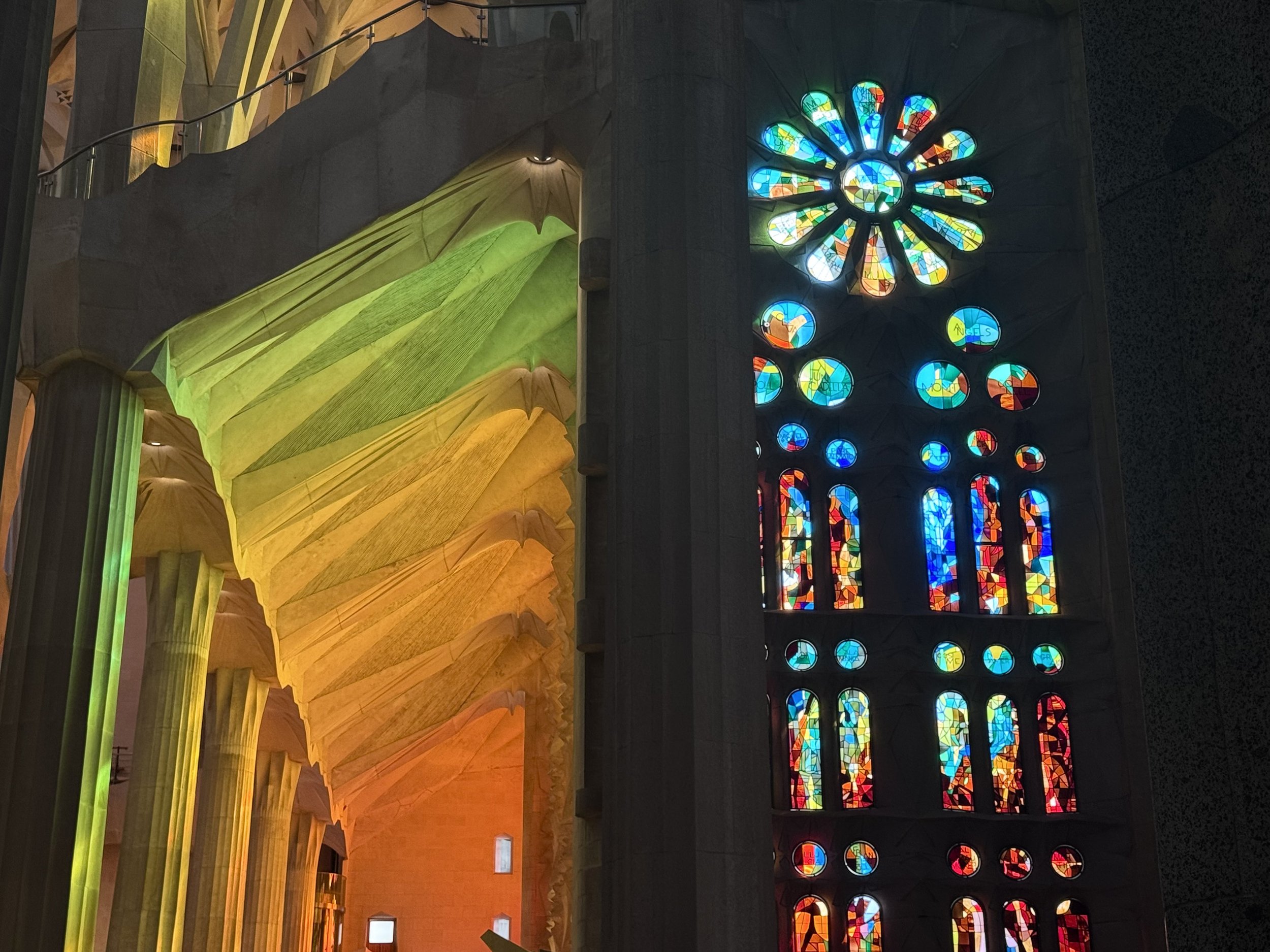
Warm colors bathing Sagrada Familia’s interior in the late afternoon.
Who designed the Sagrada Familia windows?
Many of the leaded glass windows contain inscriptions of the names of saints, sanctuaries, churches, and other sacred places – more than 750 of them. Most of the names of sanctuaries and churches are placed in the circular windows, while the tall vertical windows (lancets) are dedicated to saints. Gaudí laid out broad parameters for the design of the windows – including the color spectrum and subject matter for each façade. He also dictated that the deepest color windows be at the lower levels, where visitors could read the inscribed names and fully experience the colors, with the windows gradually lightening in color as they rose. The upper-level windows were to be clear glass, to bathe the interior in sunlight. (Here Gaudí intentionally flipped the traditional Gothic cathedral design with richly colored windows placed up high, making for dim church interiors that require candlelight or other lighting even during the brightest hours of the day.) Gaudí designed the windows to capitalize on not only on the sun’s daily path, but also how the light changes based on the season. The riot of colors is at its most intense around the solstices: June 20-21 in the summer and December 21-22 in winter.
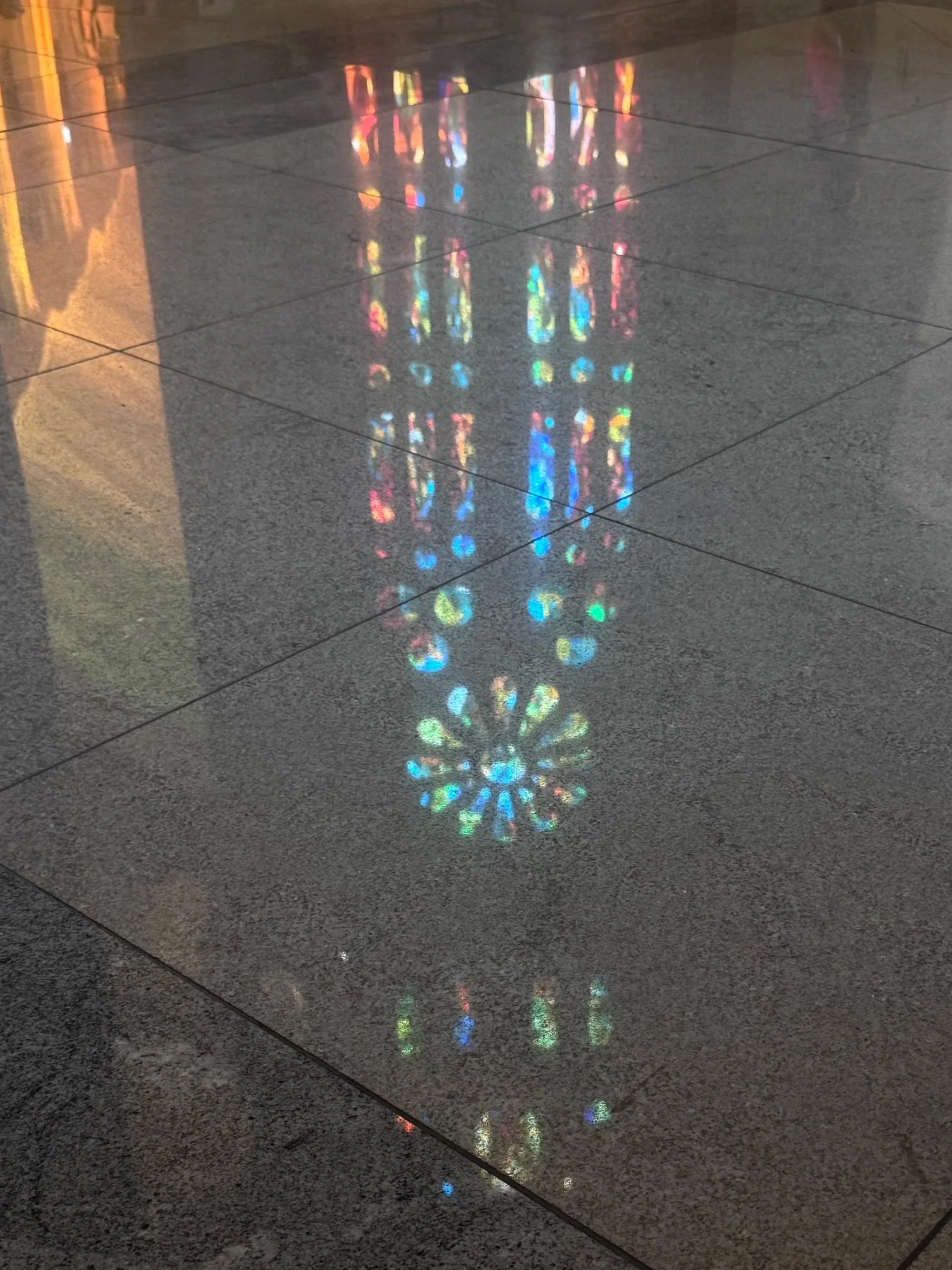
Be sure to look down!! The reflections on the basilica’s floor are breathtaking.
While Gaudí created a clear spatial and symbolic outline for how natural light should be used to illuminate the basilica, it was up to Catalan artist Joan Vila-Grau to design the individual windows. (Gaudí died in 1926, long before the nave walls and window frames were even built.) Vila-Grau was commission to design the windows in 1999 and worked on them tirelessly until his death in 2022. Via-Grau focused on abstract compositions and the play of colors, using lead-line patterns to create additional movement. (The H-shaped lead structure that holds the pieces of colored glass together also serves a practical purpose, allowing the glass to expand and contract with temperature swings, prolonging the life of the windows.)
Sagrada Familia: Why’d it take 150 years?
Why has completing Sagrada Familia taken so long?! The basilica has had a long and troubled history since Gaudí first conceived of the plan in 1883. Funding for construction has been an ongoing issue, largely because neither the Catholic Church nor the Spanish government has contributed any money at all to the project. Sagrada Familia was designed as an expiatory temple, funded entirely by donations from the faithful, with contributions symbolizing both an act of penance and collective ownership of the church by the faithful.
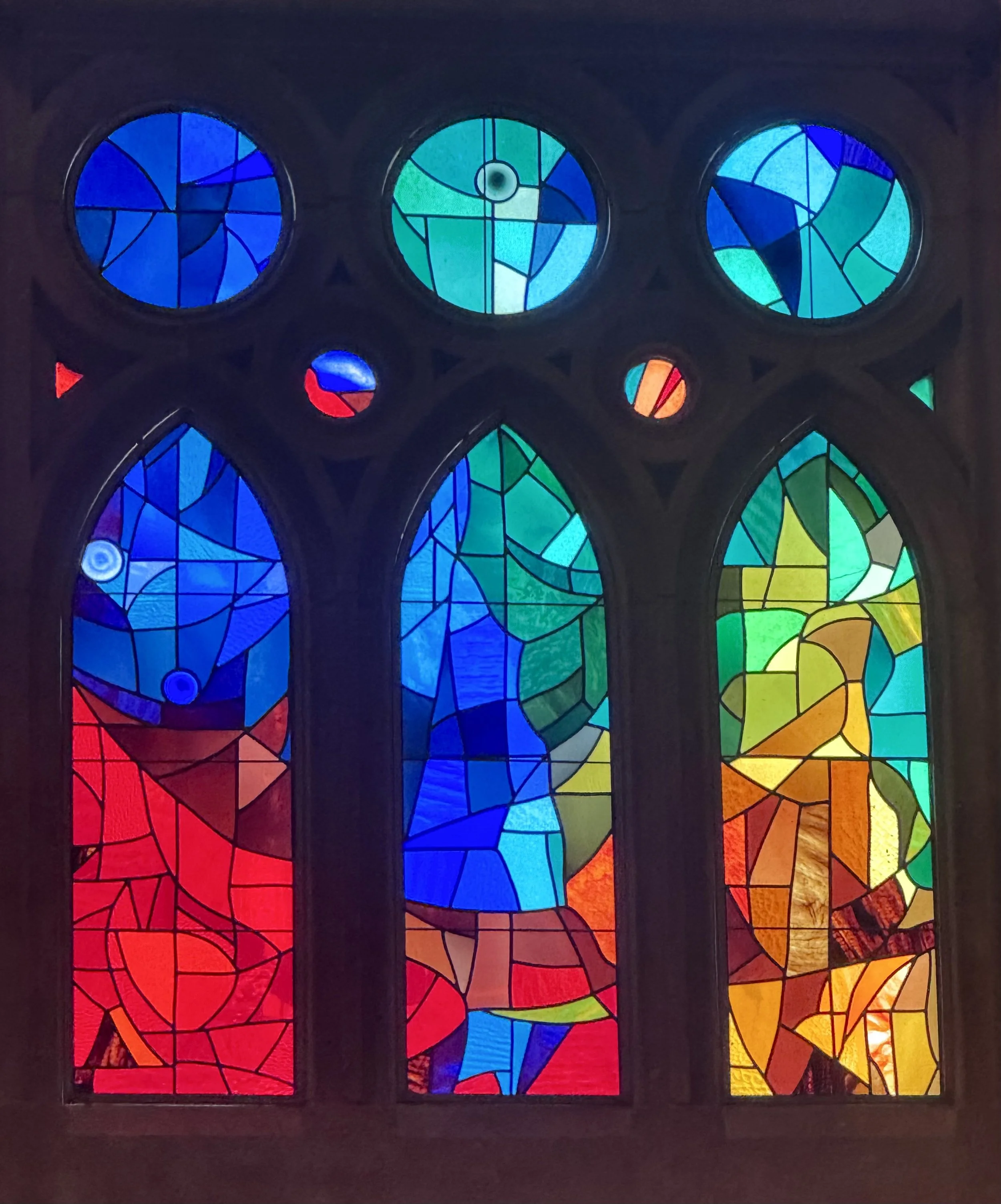
Many of the windows in Sagrada Familia’s apse, behind the alter, contain a mix of warm and cool colors from both sides of the basilica.
Work on a neo-Gothic cathedral on the site began in 1882 under a different architect (Francisco de Paula del Villar, a diocesan architect who was committed to following traditional neo-Gothic design templates.) When Antoni Gaudí took over as chief architect in 1883, he was determined to take the project in a completely different direction but knew he would never see the basilica completed. By the time he died in 1926, the project was only about 15% complete. It was subsequently vandalized during the Spanish Civil War. Despite many setbacks, the 18th and final tower, the tower of Jesus Christ, was structurally completed and crowned with a cross in February of 2026, making La Sagrada Familia the tallest church in the world. Pope Leo XIV officiated a mass commemorating the hundredth anniversary of Gaudí’s death in June of 2026 and blessed the completed tower.
On this year's trip, our second to the basilica, we visited La Sagrada Familia twice: once on a small group tour mid-day, and again the following afternoon, when the sunlight effects through the stained-glass windows are at their best.
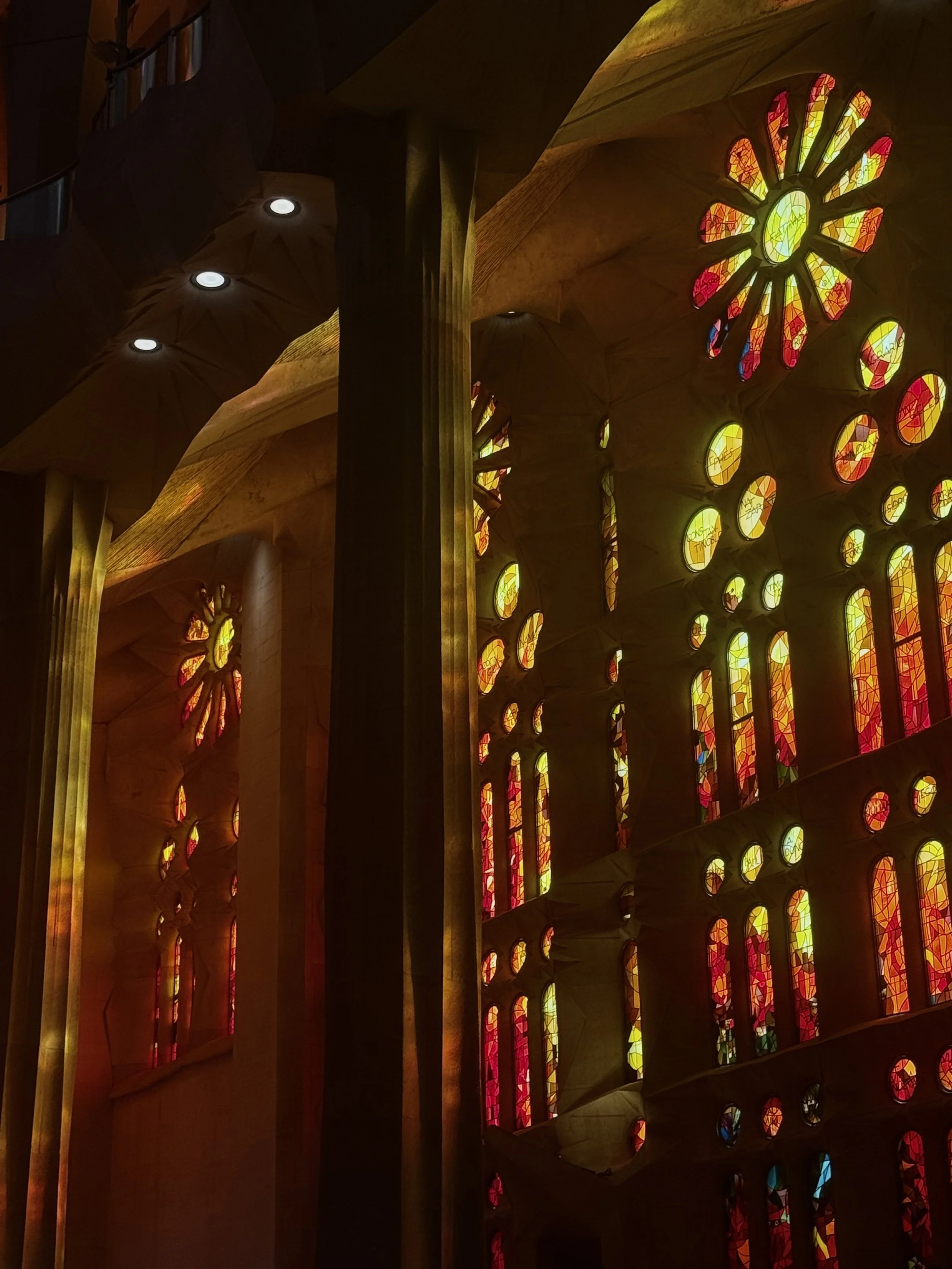
Afternoon light, Passion Facade, Sagrada Familia
We also took the elevator up the Passion Tower and enjoyed the views from 295 feet up as well as the ability to get a close look at the tower’s stonework and mosaics. You can buy currently tickets to tour either the Passion Tower or the Nativity Tower, and it’s well worth the extra cost, assuming you don’t have mobility issues (see below).
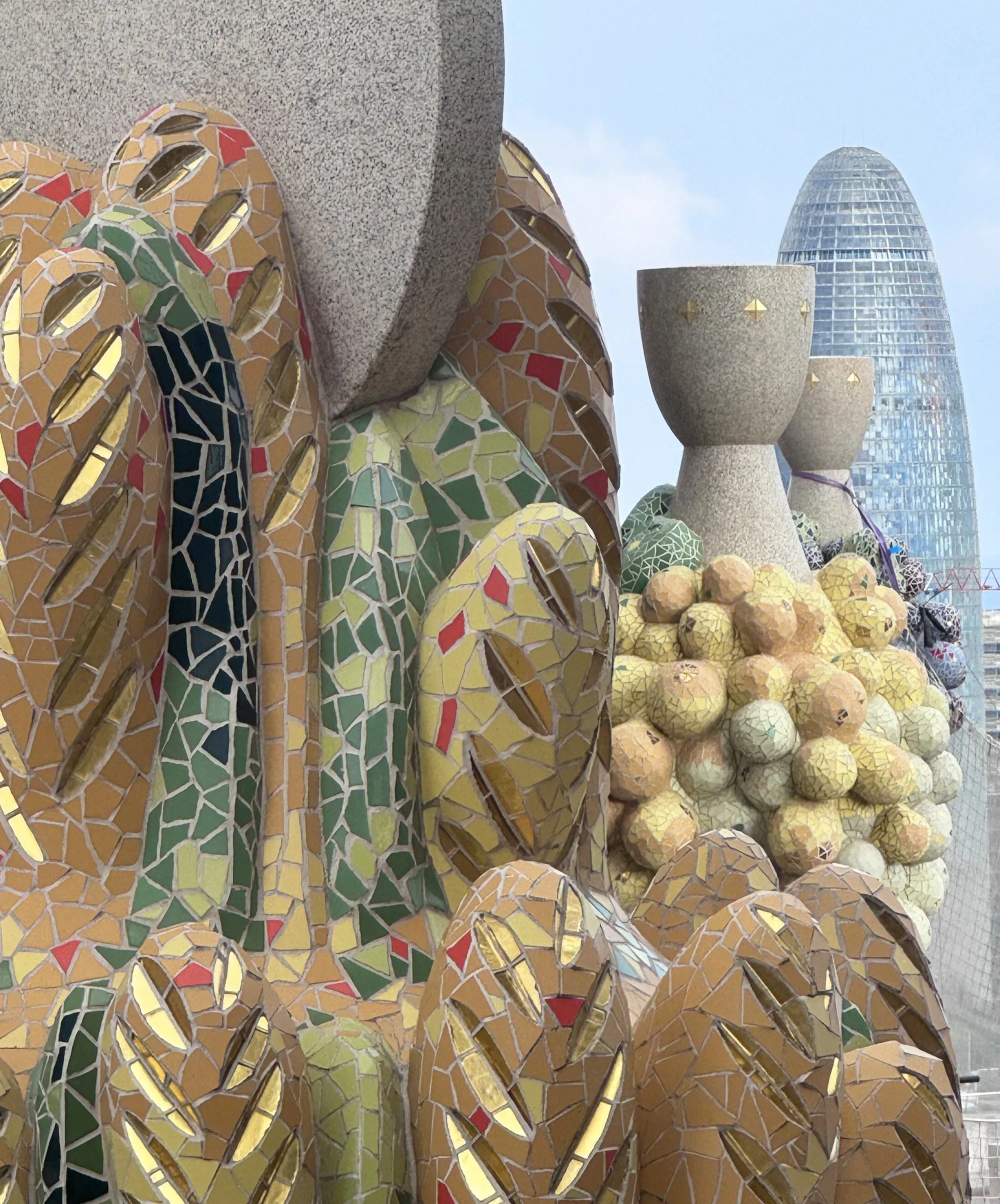
Views from the Passion Tower, including the distinct Torre Glòries in the distance, the highest commercial building in Barcelona. The building’s colored aluminum sheeting consists of 40 different high-gloss colors. The tower is illuminated at night, with the 4,500 illuminated panels constantly changing their colors.
Be forewarned: While the views from the top, including closeups of the tower mosaics, are well worth the trip, to return to ground level you must walk down 425 stone steps in a rather poorly lit and steep spiral staircase.
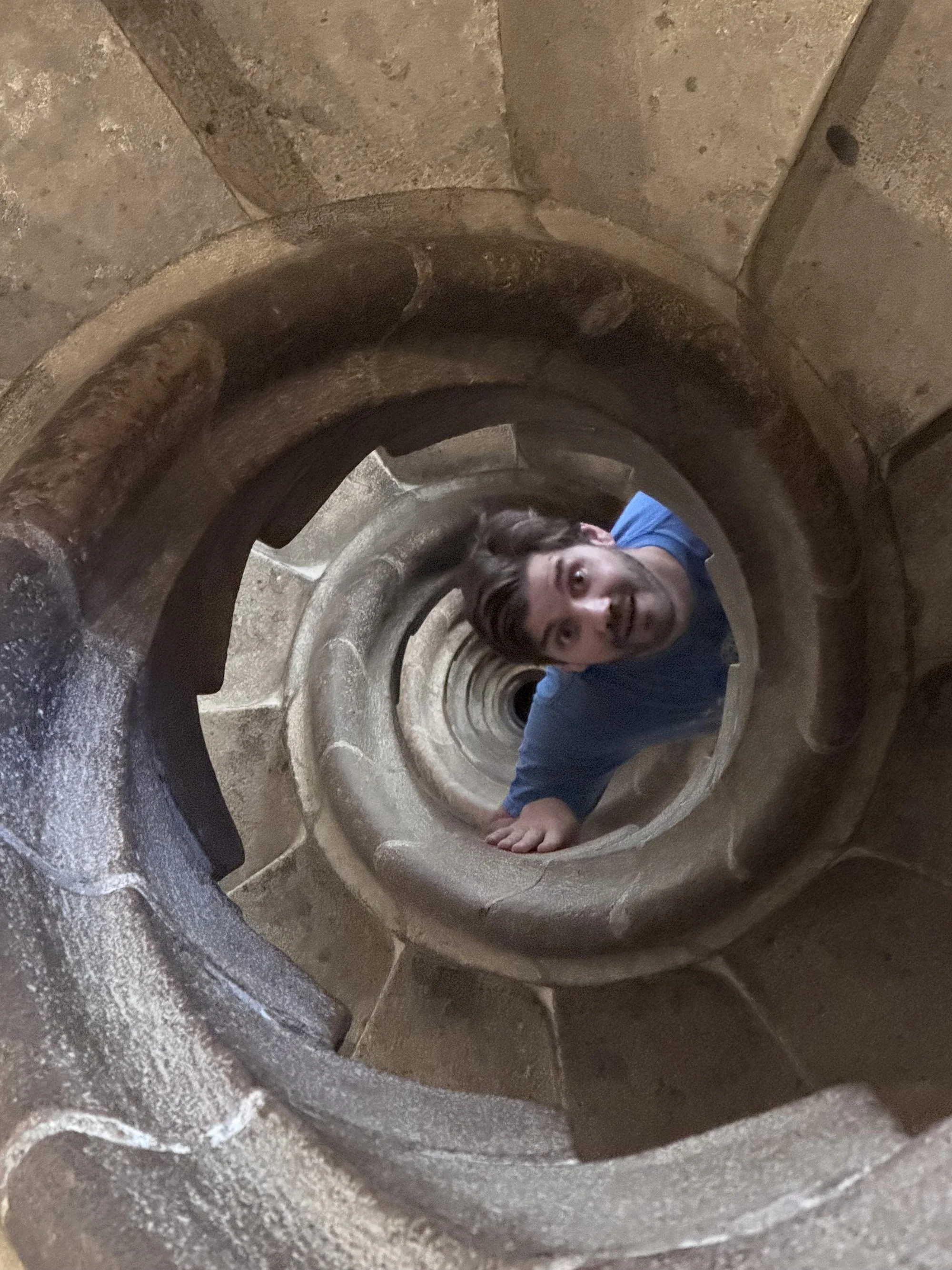
Looking down the Passion Tower’s spiral staircase, with its .
Is Sagrada Familia really done?
I first visited Antoni Gaudí's masterpiece La Sagrada Familia 15 years ago when there was still significant work to be done, and I promised myself I’d come back when the church was finished. I'm not sure it will be truly finished in my lifetime, but all 18 external towers are now in place. Twelve towers (four per façade) represent the apostles, four the evangelists, one the Virgin Mary, and the tallest is, of course, for Jesus Christ. While the structural work is complete, there is still internal and external decorative work to be done. (The most significant is completion of the Glory Façade, which will take another decade or so.) The final touch will be adding a total of 84 bells, distributed across the towers, along with another 48 liturgical bells to be placed on the Glory Facade. (Today, the basilica relies extensively on an electronic carillon, along with a few traditional cast bronze bells. Historically, churches relied on a single bronze bell for liturgical use.)
Gaudí spent years studying bell acoustics and chose tubular bells for the basilica because these bells can be precisely tuned, unlike traditional cast bronze bells, and have a distinctive singing tone rather than a metallic clang. Gaudí designed a system of tubular bells to function as a giant carillon, so the bells can be played together from a single, central keyboard within the basilica. Each bell corresponds to a key on a standard piano, with the tubular bells ranging in length from 60 centimeters to 18 meters. The bells will surround the basilica with music and carry music across most of Barcelona (for a nearly three-mile radius from the basilica). Installation of the bells is projected for 2036 through 2038. I hope to return to Sagrada Familia to hear them ring!!
Thank you so much for reading my art blog! I hope you will take a few minutes to check out my joyful, layered landscapes elsewhere on my website. And I would love to have you sign up for my monthly newsletters, which includes art-related insights, studio views, and early access to my latest paintings. You can sign up for it here – just one email a month and I promise I will never share you email: https://lp.constantcontactpages.com/sl/4V6bXBh
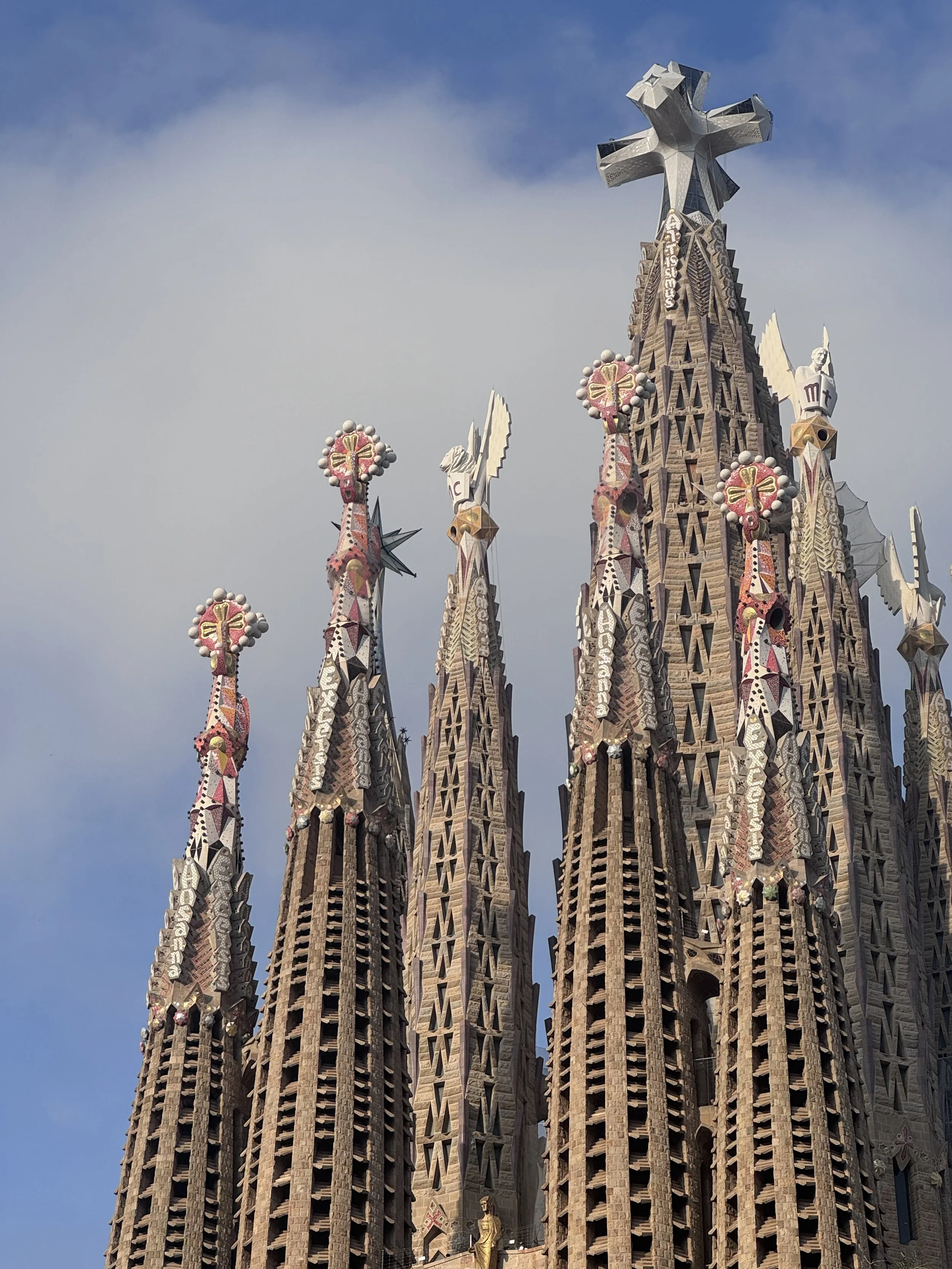
Our view as we departed the cathedral grounds, with the ever-present construction cranes cropped out of the view.